Wholesale perfume vendors are suppliers—brand-authorized distributors, bonded importers, overstock liquidators, or private-label manufacturers—who sell fragrance in bulk to retailers, distributors, and online sellers rather than to individual consumers. The most reliable vendors provide traceable sourcing documents, consistent batch coding, flexible case-pack or carton minimums, and support for international shipping and customs paperwork. Choosing the right one depends less on who offers the lowest unit cost and more on who can prove authenticity, maintain supply continuity, and ship compliantly across borders.
Summary
- A genuine wholesale perfume vendor sells by the carton or pallet, not the single unit, and can document the origin of every batch it ships.
- Vendors fall into a few distinct categories—authorized distributors, overstock/liquidation suppliers, and private-label manufacturers—each with different pricing logic and risk profiles.
- Vetting should focus on authentication documents, hazardous-goods shipping compliance (fragrance is classified as dangerous goods due to alcohol content), and realistic minimum order quantities.
- Long-term sourcing relationships, rather than one-off spot purchases, are what protect margin and supply continuity for retailers and distributors.
What Does "Wholesale Perfume Vendor" Actually Mean?
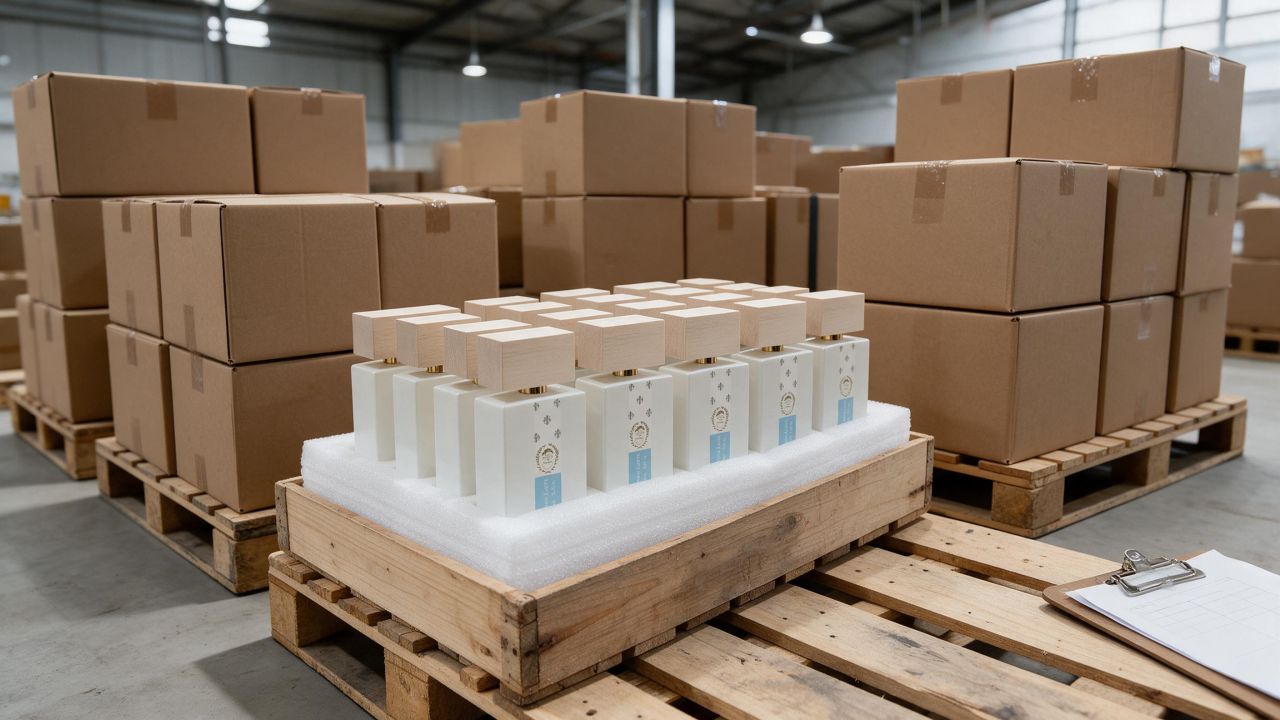
In the fragrance trade, "wholesale" is not just a discount tier—it describes an entirely different commercial relationship than retail. A wholesale perfume vendor sells in bulk units (cartons, master cases, or pallets), issues trade invoices rather than consumer receipts, and typically requires a registered business entity, a resale certificate or import license, and a minimum order quantity (MOQ) before opening an account. Buyers in this channel are retailers restocking shelves, distributors supplying a regional territory, e-commerce sellers building a catalog, or duty-free and hospitality buyers sourcing for gifting programs.
Because the buyer is a business, the conversation with a vendor is structured around different questions than a consumer would ask: What is the lead time from order confirmation to shipment? Is pricing tiered by volume? Can the vendor accommodate mixed cartons across SKUs, or does each case have to be a single fragrance? These operational details matter more than any single list price, because they determine how predictably a buyer can replenish stock and how much working capital gets tied up in inventory.
Many B2B buyers first encounter wholesale perfume vendors through trade directories, fragrance and cosmetics trade shows, or supplier networks within the duty-free and travel retail industry, rather than through consumer-facing marketplaces. Vetting a vendor found through a personal referral or an established trade show presence is generally more straightforward than vetting one found through a cold outreach message, simply because there is already a layer of industry accountability attached to the introduction.
Types of Wholesale Perfume Vendors You Will Encounter
Not all vendors source product the same way, and the category a vendor falls into has a direct effect on authenticity risk, available documentation, and pricing structure.
Authorized Distributors and Brand-Licensed Importers
These vendors hold formal distribution agreements with fragrance houses or their regional licensees. They can usually provide certificates of authenticity, consistent batch coding, and a stable catalog. Pricing is generally higher than liquidation channels but comes with lower authenticity risk and more predictable reordering.
Overstock, Closeout, and Liquidation Suppliers
This channel moves excess inventory, discontinued packaging, or returned retail stock. It can offer attractive margins, but lot composition is inconsistent—buyers may receive mixed brands, limited restock availability, and less transparency about chain of custody. This is the category where counterfeit risk is highest, so documentation checks matter most here.
Private-Label and White-Label Manufacturers
Some B2B buyers skip third-party brands entirely and commission their own fragrance under a manufacturer's existing formulations, filled into house packaging. This path requires higher MOQs and longer lead times but gives the buyer control over margin, exclusivity, and branding—useful for retailers who want a differentiated catalog rather than reselling the same designer names as every competitor.
Vetting a Supplier: Authenticity, Documentation, and Compliance
Price is the easiest thing to compare between vendors and the least reliable signal of quality. Before negotiating volume discounts, a buyer should confirm that a vendor can answer the following without hesitation.
- Chain of custody: Can the vendor explain where the stock originated—direct from a brand, a licensed distributor, or a secondary liquidation lot?
- Batch and lot codes: Legitimate stock carries manufacturer batch codes that can be cross-checked. A vendor who cannot explain or preserve these codes is a warning sign.
- Sample consistency: Request a sample carton before committing to a full pallet order, and compare cap, box printing, and juice color against reference units.
- Trade references: An established vendor should be willing to share references from other retailers or distributors who have reordered more than once.
For buyers assembling a catalog around recognizable designer names alongside more exclusive options, it is worth asking vendors directly whether they carry niche perfume lines with documented sourcing, since niche and prestige fragrances tend to carry a higher counterfeit incentive than mass-market names.
Evaluating a Vendor's Business Credentials
Beyond product-level checks, it is worth confirming the vendor's standing as a registered business: a verifiable company registration number, a consistent business address that matches invoices and shipping documents, and, where relevant, membership in an industry trade association. A vendor who operates only through personal messaging apps, without a traceable company registration, shifts more risk onto the buyer if a dispute over an order ever needs to be resolved formally.
Minimum Order Quantities, Pricing Tiers, and Margin Planning
Wholesale perfume pricing is almost always structured in tiers tied to volume: a case-pack minimum for a first order, a lower per-unit cost at pallet quantity, and further discounts for recurring or annual purchase commitments. Buyers should map these tiers against their own sell-through rate rather than ordering the maximum tier simply because the unit price looks better on paper—overbuying slow-moving SKUs erodes margin faster than a slightly higher per-unit cost on a smaller order.
When comparing vendor quotes, ask about the full landed cost structure, not just the ex-works unit price: freight, insurance, import duty, and any packaging or labeling customization fees should all be itemized. A vendor who only quotes a flat per-bottle number without breaking out these components makes it harder to forecast true margin once the stock clears customs and reaches a warehouse.
Bottle size also affects both price point and the customer segments a retailer can serve. Smaller formats such as a 38ml bottle format work well for travel retail, gifting, and impulse-purchase placements, while a 50ml bottle format suits everyday retail shelf space where repeat purchase and regular use are the priority. Carrying both formats across a catalog gives a buyer flexibility to serve different retail channels without renegotiating a separate vendor relationship for each.
Logistics, Customs, and Import Compliance for Fragrance
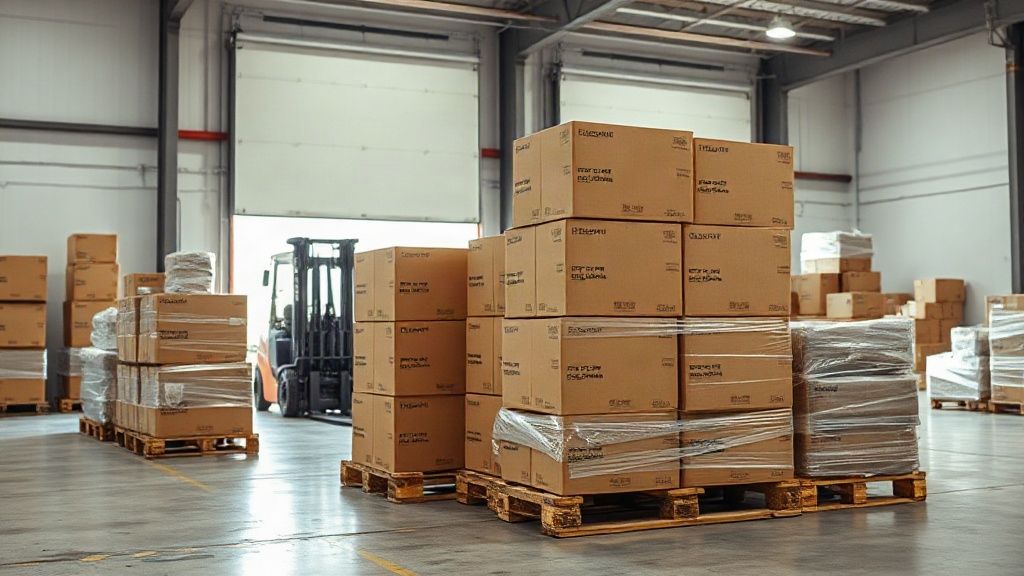
Perfume is classified as a dangerous good for transport purposes because of its high alcohol content, which means it cannot move through every freight lane the way ordinary dry goods can. Air freight on perfume typically requires dangerous goods (DG) packaging, labeling, and carrier certification, which adds cost and lead time compared to sea freight. Many B2B buyers find that ocean freight, while slower, is the more economical default for container-scale orders, reserving air freight for smaller, time-sensitive replenishment.
Documentation to Request Before Shipment
- Commercial invoice and packing list that match the purchase order line by line
- Material Safety Data Sheet (MSDS) or Safety Data Sheet (SDS) for the dangerous-goods classification
- Certificate of origin, where relevant to the buyer's import duty calculation
- Any brand-specific authenticity or distribution documentation the vendor has already committed to providing
Customs Considerations
Import duty and tax treatment for fragrance varies by destination market and by whether the product is classified as cosmetic or as an alcohol-containing good, which can change the applicable tariff code. Buyers importing at scale should confirm the harmonized system (HS) code the vendor uses on export paperwork and verify it against their own customs broker's classification before the first shipment leaves origin, since a mismatch can cause delays or unexpected duty assessments at the border.
Incoterms also shape how much logistics responsibility falls on the buyer versus the vendor. An EXW (Ex Works) quote leaves the buyer responsible for arranging freight from the vendor's warehouse, while an FOB (Free on Board) or CIF (Cost, Insurance, and Freight) quote shifts more of that responsibility, and cost, onto the vendor up to a named port or destination. Buyers new to importing fragrance in bulk are often better served starting with an FOB or CIF arrangement, even at a slightly higher quoted price, since it reduces the number of logistics variables they have to manage directly on a first order.
Building a Catalog: Designer Names, Niche Lines, and Gift Sets
A wholesale buyer's catalog decisions shape who ends up shopping at the retail level. Mass-market designer names drive footfall and repeat purchase because of brand recognition, but margin on those lines is often thinner due to wider availability across competing retailers. Rounding out a catalog with harder-to-find niche fragrance houses can differentiate a storefront and support a higher margin, since fewer competitors are stocking the same names.
Gift-oriented formats are another category worth planning for separately from single-bottle stock. A curated perfume gift set assortment performs well around seasonal gifting periods and corporate or hospitality gifting programs, and it often carries a better margin than the equivalent bottles sold individually, since the packaging and presentation add perceived value without a proportional cost increase.
Regional demand also varies by climate and gifting calendar, so a catalog that performs well in one market may need a different balance of lighter, fresher compositions versus heavier, long-lasting ones elsewhere. Buyers supplying multiple territories often maintain a core assortment of dependable, widely recognized names, then adjust the remaining share of the catalog—niche additions, gift sets, or specific bottle sizes—to match each market's buying pattern.
Red Flags That Signal an Unreliable Vendor
Certain patterns recur among vendors that end up causing problems for B2B buyers, and recognizing them early avoids a costly inventory write-off later.
- Prices that are dramatically below the rest of the market for the same brand and size, with no explanation tied to lot size, packaging condition, or overstock status.
- Reluctance to provide batch codes or a sample unit before a full order is placed.
- Inconsistent carton contents from one shipment to the next, where the same SKU arrives with different box printing, cap finish, or fill level.
- No fixed business address or verifiable trade history, especially for vendors contacted only through informal messaging channels rather than a registered business presence.
None of these signals alone is automatically disqualifying—liquidation stock legitimately varies in packaging condition, for instance—but a vendor who cannot explain the reason behind an anomaly, or who avoids the question, is a bigger risk than one who answers it directly.
Moving From a First Order to a Long-Term Supply Relationship
Treating a first wholesale order as a trial run rather than a full commitment protects a buyer's cash flow while a new vendor relationship proves itself. A smaller initial case-pack order, paired with a direct comparison against reference stock, gives a buyer the data needed to decide whether to scale up to pallet quantities. It also helps to agree in advance on how returns, damaged cartons, or short shipments will be handled, since resolving this after a dispute already exists is far harder than setting the expectation up front.
Once a vendor has proven consistent on authenticity, packaging, and on-time shipping across two or three orders, it becomes worth formalizing the relationship: negotiating a standing price tier, agreeing on restock lead times for the SKUs that sell fastest, and discussing whether the vendor can support exclusivity on certain lines or custom case-pack configurations. A dependable vendor relationship compounds in value over time, because reorder lead times shorten, pricing stabilizes, and the buyer spends less time re-vetting a new source every quarter.
Frequently Asked Questions
What is the typical minimum order quantity for wholesale perfume?
Minimums vary widely by vendor type and category. Authorized distributors often set case-pack minimums per SKU, while private-label manufacturers typically require a larger volume commitment to justify custom production. Buyers should always confirm MOQ, and whether it applies per SKU or across a mixed order, before negotiating price.
How can a buyer verify that wholesale perfume stock is authentic?
Request batch or lot codes and compare them against a reference unit, ask for documentation showing the chain of custody from brand or licensed distributor to the vendor, and order a sample carton before committing to a full pallet. Vendors confident in their stock will not hesitate to provide this information.
Why does shipping perfume cost more than shipping other wholesale goods?
Perfume is classified as a dangerous good for freight purposes because of its alcohol content, which requires specific packaging, labeling, and carrier certification—particularly for air freight. This is why many B2B buyers default to sea freight for container-scale orders and reserve air freight for smaller, time-sensitive restocks.
Should a new retailer start with designer fragrances or niche lines?
Most retailers build an initial catalog around recognizable designer names to drive traffic and establish trust, then layer in niche or harder-to-find lines once the storefront has traction. Niche fragrances typically carry better margin potential precisely because fewer competitors stock them, making them a strong second phase rather than a starting point for an unproven storefront.