
Wholesale perfume oils are concentrated, alcohol-free fragrances sold in bulk volumes directly to retailers, distributors, and private label brands at trade pricing, typically starting from a few liters per SKU rather than single retail units. Because they skip the ethanol dilution and multi-week maceration that eau de parfum requires, they give importers longer shelf stability, simpler customs classification in many jurisdictions, and wider margin room for private label or refill programs. For a buying team, sourcing them successfully comes down to three checks before the first purchase order: supplier documentation, minimum order quantities, and a shipping plan that accounts for customs and packaging requirements.
Summary
- Wholesale perfume oils are bulk, alcohol-free fragrance concentrates used by retailers and distributors for private label lines, refill stations, and multi-brand catalogs.
- They generally cost less per unit at volume than finished eau de parfum, with margin advantages that grow as order size increases.
- Supplier vetting should cover ingredient documentation, IFRA compliance, minimum order quantities, and lead times before any deposit is paid.
- Customs classification, hazardous materials paperwork, and packaging for bulk liquid shipments are the most common friction points for first-time importers.
What Are Wholesale Perfume Oils
Wholesale perfume oils are fragrance concentrates, usually blended in a carrier base such as fractionated coconut oil, sweet almond oil, or a synthetic odorless carrier, and sold in bulk containers ranging from one-liter bottles to twenty-five-liter drums. Unlike consumer-facing eau de parfum or eau de toilette, they are not diluted with denatured alcohol, which changes how they behave in storage, in shipping, and in a retailer's own blending or bottling operation. A business buying wholesale perfume oils is usually doing one of three things: reselling them as finished oil-based perfume under its own label, using them as the fragrance input for candles, soaps, or diffusers, or decanting them into smaller retail bottles for a boutique or subscription catalog. Because the oil itself is the finished fragrance compound rather than a diluted spray product, the buyer inherits more control over final concentration, bottle format, and shelf positioning than they would with pre-bottled finished goods.
It is also worth distinguishing wholesale perfume oils, which are wearable fragrance concentrates, from the fragrance oils used purely for candle-making or diffuser manufacturing, since the two categories sometimes overlap in a supplier's catalog but are formulated differently for skin contact versus combustion or diffusion. A buyer intending to resell oils as a wearable product should confirm with the supplier that the specific SKU is formulated and tested for skin application rather than sourced from a home-fragrance line.
Why Businesses Choose Perfume Oils Over Alcohol-Based Fragrances

Buyers moving into fragrance retail or expanding an existing catalog usually weigh perfume oils against alcohol-based eau de parfum on three axes: cost structure, shelf behavior, and regulatory handling. Oils tend to win on all three for a specific kind of retailer, one focused on private label, attar-style products, or oil-based lines for markets where alcohol-free formulations are preferred or required.
Profit Margins and Positioning
Because perfume oils are sold in bulk concentrate form, the per-milliliter cost at the input stage is lower than buying finished, already-bottled eau de parfum in small case quantities. A retailer that decants and packages its own oils captures the margin that would otherwise go to a bottling and marketing intermediary. This also allows a business to build a tiered catalog, entry-level oil blends alongside a premium line, without negotiating separate supplier relationships for each price point.
Shelf Life and Storage Advantages
Alcohol-based perfumes are vulnerable to evaporation and color shift if caps are loose or storage temperatures swing. Perfume oils, especially those in a stable carrier base, generally tolerate warehouse conditions better and have a longer practical shelf life before noticeable degradation, which matters for distributors holding inventory across a full season or shipping to climates with high heat exposure during transit. This storage stability also reduces the need for climate-controlled warehousing, which lowers overhead for distributors running large seasonal inventories.
Regulatory Flexibility in Alcohol-Restricted Markets
Some export markets and retail channels restrict alcohol content in cosmetic and personal care products, whether for religious, cultural, or import-licensing reasons. Because wholesale perfume oils are alcohol-free by formulation, they often clear a different regulatory pathway than eau de parfum in these markets, which is one reason distributors serving regions with alcohol-free retail requirements specifically request oil-based catalogs rather than spray formats. A buyer entering one of these markets should confirm with the supplier whether an alcohol-free or halal-style certification is available alongside the standard safety documentation, since retail partners in these regions frequently require it before listing a product.
How to Source Wholesale Perfume Oils
Sourcing starts with matching a supplier's catalog and minimum order quantity structure to the buyer's actual sell-through capacity, not the other way around. Many first-time importers over-order because a supplier's bulk pricing tier looks attractive, then sit on inventory that ties up working capital for months while margins erode under storage and financing costs.
Minimum Order Quantities
MOQs for wholesale perfume oils vary widely by supplier and by whether the buyer wants a single fragrance in volume or a mixed pallet across a catalog of scents. Smaller workshops may accept mixed-case minimums suited to a boutique testing a new line, while larger manufacturers set volume minimums per SKU to justify a production run. A buyer should request the MOQ structure in writing alongside tiered pricing before sampling, since many suppliers offer better per-unit rates at the second or third reorder rather than the first trial order.
Lead Times and Production Planning
Lead time depends on whether the supplier blends to order or holds standing stock of popular fragrance profiles. Custom blends, exclusive accords, or private label formulations typically require longer production windows than standard catalog scents. Buyers planning a seasonal launch should confirm production lead time plus shipping transit time well before the intended shelf date, building in a buffer for customs clearance on the receiving end and for any quality recheck the buyer wants to run on arrival.
Logistics, Customs, and International Shipping for Bulk Fragrance Oils
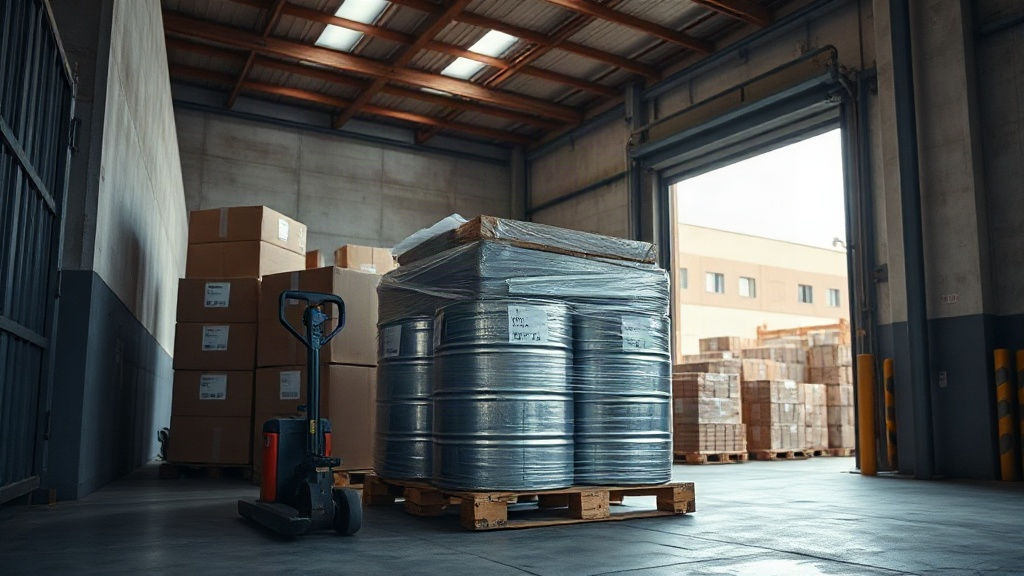
Bulk liquid fragrance shipments carry their own logistics profile compared to finished retail goods, and this is where many first-time B2B buyers underestimate cost and timeline. Perfume oils generally ship as commercial cargo rather than small parcel, and depending on volume and carrier base, some formulations may be classified under hazardous materials or dangerous goods rules for air freight due to flashpoint, which affects both routing options and insurance cost.
Smaller trial orders are often cost-effective to move by air freight despite the higher per-kilogram rate, since the trade-off against weeks of ocean transit time can make sense when a buyer is testing a new market. Larger reorders, by contrast, usually move by ocean freight once volume is established, since the per-unit freight cost drops substantially and the longer transit time can be planned around rather than treated as a bottleneck.
Customs Documentation and Compliance
Importers should request a certificate of analysis, safety data sheet, and country-of-origin documentation from the supplier before shipment, since customs authorities in most markets require this paperwork to classify and clear bulk fragrance concentrate. Tariff classification for fragrance oils can differ from finished perfume, so a buyer's customs broker should confirm the correct code for the destination country rather than assuming it matches a previous finished-goods shipment. Missing or mismatched paperwork is one of the most common causes of delayed clearance for first-time fragrance importers.
Packaging for Safe Transport
Bulk oils are typically shipped in sealed drums or jerry cans with secondary containment, palletized and secured for ocean or air freight. A reliable supplier will provide packaging suited to the shipping method agreed upon, and will disclose flashpoint and handling classification up front rather than leaving the importer to discover it at the port. Buyers should also confirm whether the quoted price is ex-works, FOB, or CIF, since the gap between those terms materially changes landed cost once freight and insurance are added to the base purchase price.
Choosing a Reliable Wholesale Perfume Oil Supplier

Supplier selection is the single highest-leverage decision in this category, because a batch quality problem or a missed compliance document surfaces only after the inventory has already landed and been invoiced to downstream accounts.
Quality Certifications and Ingredient Sourcing
Ask for IFRA compliance statements and ingredient disclosure for any blend under consideration, particularly if the buyer's target market has restrictions on specific allergens or raw materials. A supplier that sources natural materials such as bergamot, jasmine absolute, or oud should be able to speak to traceability and batch consistency, since fragrance oils blended from natural extracts can vary season to season unless the supplier controls for that in formulation. Buyers should also ask how the supplier handles batch testing internally before a shipment is released for export.
Private Label and Custom Blending Options
Many wholesale suppliers offer private label or white label programs, allowing a retailer to sell a signature blend under its own brand rather than a shared catalog name. This is a meaningful differentiator for distributors trying to build brand equity rather than compete purely on price against other resellers carrying the same supplier's standard catalog. Custom blending also lets a buyer tailor concentration levels to a specific regional market or retail price tier.
Building a Profitable Product Line with Perfume Oils
A sourcing decision rarely stands alone, most B2B buyers are assembling a catalog, not a single SKU, and the fragrance oil purchase should fit into a broader assortment plan. Retailers blending oils into a finished line often pair concentrated oil SKUs with bottled formats for customers who prefer a ready-to-use spray, which is why many importers sourcing wholesale perfume oils also stock complementary bottled lines from the same supplier to round out a catalog. A distributor building a premium tier, for instance, may pair oil concentrates with a niche perfume oils collection sourced from the same manufacturer, giving retail partners a higher price point option alongside standard offerings. Bundled formats also perform well at wholesale: a curated perfume set gives retail buyers an easy gifting or starter-kit SKU without requiring the importer to negotiate a separate production run. On the bottled side, buyers commonly stock both a compact 38ml perfume format for travel-size or gift-with-purchase programs and a 50ml perfume format as the standard retail size, which gives downstream accounts flexibility in how they merchandise the line without the importer managing more than one core supplier relationship.
Buyers evaluating a first order are generally better served by starting with a smaller trial purchase across two or three fragrance profiles before committing to a full container, since this limits downside if a particular blend underperforms with a specific retail audience. Once sell-through data comes back from the first cycle, reordering at a larger volume typically unlocks better per-unit pricing and shorter production lead times, since the supplier can plan the batch around a known, repeat account rather than a one-off trial order.
Frequently Asked Questions
What is the typical minimum order quantity for wholesale perfume oils
Minimum order quantities vary by supplier and by whether the order covers a single fragrance or a mixed catalog. Workshop-scale suppliers may accept smaller mixed-case minimums suited to a first trial order, while larger manufacturers set per-SKU volume minimums tied to production runs. Always request the MOQ and tiered pricing structure in writing before committing to a first purchase order, and clarify whether the minimum applies per fragrance or across the full order.
Are wholesale perfume oils regulated differently than alcohol-based perfume for import
Yes, in many cases. Bulk fragrance oils can fall under different customs tariff classifications than finished alcohol-based perfume, and depending on the carrier base and flashpoint, some formulations are subject to hazardous materials shipping rules, particularly for air freight. A customs broker should confirm the correct classification for the destination country before the shipment departs.
How should a buyer evaluate perfume oil quality before placing a large order
Request a sample set along with a certificate of analysis and safety data sheet, and compare scent consistency across at least two production batches if possible. Ask about ingredient sourcing for natural materials and whether the supplier can confirm IFRA compliance for the intended market, since allergen and ingredient restrictions vary by region.
Can retailers get custom or private label perfume oil blends from a wholesale supplier
Many wholesale fragrance oil manufacturers offer private label or custom blending programs, allowing a retailer to launch a signature scent under its own brand rather than reselling a shared catalog name. This typically requires a longer production lead time than ordering from standard stock, so it should be planned well ahead of a launch date.