Wholesale perfume in New York is sourced through import-export distributors, showroom-based wholesalers, and online B2B suppliers concentrated around the Garment District, Long Island City, and the greater New York and New Jersey port corridor, where buyers can access authentic, licensed fragrance inventory at tiered case-pack pricing. Retailers, distributors, and importers typically work directly with a vetted supplier rather than open marketplaces, verifying authenticity documentation, minimum order quantities, and shipping terms before placing a first order. For most B2B buyers, the fastest path to a reliable New York-based wholesale perfume source is a supplier that combines verifiable sourcing, consistent case-pack inventory, and transparent logistics support for both domestic and international shipments.
Summary
- New York is a major hub for wholesale perfume because of its port access, import infrastructure, and dense concentration of fragrance distributors and showrooms.
- B2B buyers should prioritize suppliers that provide authenticity documentation, consistent stock, and transparent minimum order quantity and tiered pricing structures rather than chasing the lowest unit cost alone.
- Customs classification, cosmetic labeling compliance, and hazmat freight terms for alcohol-based fragrance directly affect landed cost and lead time, and should be confirmed before the first purchase order.
- A diversified assortment that blends designer names, niche fragrances, and perfume sets across multiple bottle sizes helps retailers and distributors protect margin and reduce dead stock.
Why New York Is the Epicenter of Wholesale Perfume Distribution in the U.S.
New York has functioned as the commercial gateway for the American fragrance trade for decades, and that role has only deepened as e-commerce has layered on top of the city's traditional showroom culture. The Port of New York and New Jersey remains one of the busiest container ports on the East Coast, giving importers and distributors direct access to ocean freight lanes from Europe, the Mediterranean, and the Middle East. JFK and Newark airports add fast air-cargo options for time-sensitive restocks, which matters when a retailer needs a bestselling SKU back on the shelf before a holiday weekend rather than waiting weeks for a slow boat shipment.
Beyond logistics, New York has a historical density of fragrance distributors, import-export firms, and discount cosmetics wholesalers that built the city's reputation as a one-stop sourcing destination. Buyers travelling from other states or abroad can often visit multiple showrooms in a single trip, compare catalogs, and negotiate terms in person, something far harder to replicate in smaller regional markets. That density also pushes more competitive pricing tiers for high-volume buyers, since suppliers compete against each other within the same five boroughs.
Finally, New York's buyer base is unusually diverse. Duty-free operators, department stores, discount retail chains, gift shops, salons, and online resellers all draw from the same wholesale supply pool, which pushes established suppliers to maintain broad catalogs spanning designer, niche, and gift-set formats rather than a narrow product line.
Who Buys Wholesale Perfume in New York
The phrase "wholesale perfume in New York" covers a wide range of buyer profiles, and the right sourcing strategy depends on which one applies to your business.
Independent retailers and boutiques typically buy smaller, more frequent case quantities across a curated mix of designer and niche fragrances, prioritizing differentiation over sheer volume. Off-price and discount retailers tend to buy larger case-pack volumes of recognizable designer names, where margin comes from turn velocity rather than exclusivity. Regional distributors purchase in bulk from a New York-based wholesaler and then resell to smaller stores in their own territory, effectively acting as a second layer of the supply chain. Importers bring product into the U.S. market for the first time and need a supplier that can document the chain of custody clearly enough to satisfy customs and any downstream retail partners. Gift shops, spas, salons, and hospitality buyers often favor perfume sets and travel-size formats that work well as curated gifting or amenity items. Online resellers and marketplace sellers need a supplier who can ship consistently and quickly enough to support fast fulfillment promises to their own customers.
Understanding which category your business falls into helps you ask the right questions when you first contact a supplier, since MOQ flexibility, assortment breadth, and shipping speed matter differently depending on your resale model.
How to Vet a Wholesale Perfume Supplier Before You Commit
Price is the easiest thing to compare between suppliers and the least reliable way to choose one. Before signing on with any wholesale perfume source in New York, it is worth running through a short diligence checklist that protects both your inventory investment and your brand reputation with end customers.
Authenticity, Licensing, and Documentation
Counterfeit and diverted gray-market product is the single biggest risk in wholesale fragrance sourcing. A trustworthy supplier should be able to explain where inventory originates, provide invoices that support the chain of custody, and answer direct questions about sourcing without evasiveness. Ask whether the supplier holds any relevant import or resale licensing, and request documentation you can keep on file in case a brand or a downstream retail partner ever asks you to prove authenticity. Suppliers who hesitate on these questions, or who can only offer verbal assurances, are a red flag regardless of how attractive their pricing looks.
Minimum Order Quantities and Order Flexibility
Minimum order quantities vary widely across New York wholesalers, from single-case minimums on popular SKUs to much larger thresholds on close-out or clearance lots. Rather than asking only what the MOQ is, ask how MOQs scale with order history: many suppliers lower per-SKU minimums or offer mixed-SKU cartons once a buyer has a track record of repeat orders. This matters most for smaller retailers testing a new category, since a supplier that allows mixed cartons across designer, niche, and gift-set lines lets you build a balanced assortment without over-committing capital to a single fragrance that may not sell through.
Understanding the Wholesale Perfume Supply Chain
A clear mental model of how product actually moves helps buyers ask smarter questions and spot bottlenecks before they become stockouts. Fragrance typically moves from the brand or manufacturer to an authorized distributor, who may sell directly to large retail accounts or route product through a wholesale catalog aimed at smaller B2B buyers. Consolidators and freight forwarders handle the physical movement of goods, often combining multiple suppliers' shipments into a single container to reduce cost, before product lands in a bonded warehouse for customs clearance and domestic redistribution.
New York's logistics density shortens this chain considerably compared to buying from a supplier in a less connected region. Warehousing near the port or near major highway corridors means a reorder placed early in the week can realistically reach a buyer's dock within days rather than weeks, assuming the SKU is in stock. This is one of the underappreciated advantages of working with a New York-based wholesale perfume supplier: even buyers located outside the city benefit from shorter domestic transit times once product has already cleared customs locally.
Import, Customs, and Compliance Essentials for Wholesale Perfume Buyers
Perfume is not a simple commodity to move across borders, and buyers who treat it like one often get an unpleasant surprise at customs. Fragrance is classified under specific Harmonized Tariff Schedule codes for cosmetic and toilet preparations, and accurate classification affects duty rates and clearance speed. Because most fine fragrance is alcohol-based, it is also typically regulated as a flammable liquid for freight purposes, which means air shipments in particular may require hazmat-compliant packaging and documentation, and not every carrier or forwarder is set up to handle it efficiently.
On the regulatory side, cosmetic labeling rules require accurate ingredient disclosure and net contents information, and buyers reselling imported product should confirm that labeling meets U.S. requirements before it reaches a retail shelf. Buyers purchasing for resale, rather than personal use, should also be prepared to provide a valid resale certificate to claim sales tax exemption on wholesale purchases, since suppliers generally need this on file to sell without charging tax.
None of this needs to be intimidating, but it does mean the diligence conversation with a potential supplier should include logistics and compliance, not just price. A supplier experienced in both domestic wholesale and international export shipments will typically have standard answers ready for documentation, hazmat freight handling, and labeling questions, which is itself a useful signal of how established their operation actually is.
Protecting Margins: Pricing Strategy, Assortment Mix, and Inventory Turns
Profitability in wholesale fragrance resale comes less from any single transaction and more from how an assortment is managed over time. Relying on one or two bestselling designer names exposes a buyer to price competition from every other retailer carrying the identical product, which compresses margin quickly. Spreading purchasing across recognizable designer fragrances for foot traffic, alongside less commoditized niche and specialty lines, gives a retailer or distributor pricing room that pure designer resale rarely allows.
Tiered volume pricing is standard across most New York wholesale suppliers, so consolidating purchases with fewer, more reliable partners rather than spreading small orders across many suppliers often earns better per-unit terms. Inventory turnover deserves equal attention to unit cost: a cheaper case that sits on a shelf for months ties up working capital just as effectively as an expensive one. Seasonal demand planning matters too, since gifting-driven demand around major holidays can justify carrying bundled sets and travel sizes that would move more slowly during the rest of the year.
Bundling is one of the more reliable levers for raising average order value without needing to compete purely on unit price. A curated set that pairs a signature fragrance with a smaller companion size, for example, often sells at a higher basket value than the same items sold separately, while giving the end customer a stronger perceived value.
Building a Profitable Assortment: Niche, Sets, and Bottle Sizes
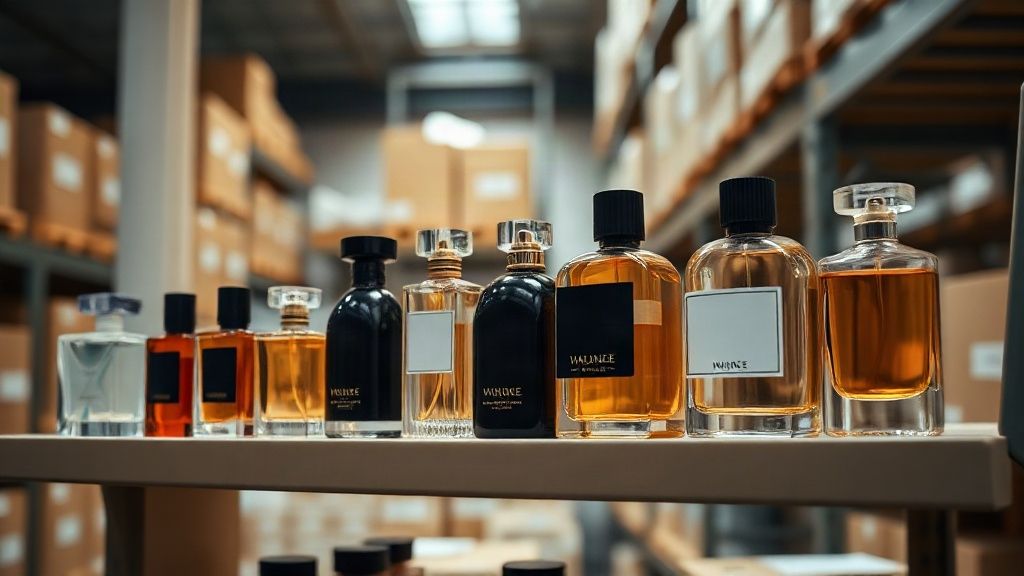
A resilient wholesale assortment usually blends three categories rather than leaning on just one. Designer fragrances drive recognition and footfall. Differentiated and exclusive options from a niche perfumes catalog give retailers a way to stand apart from competitors selling the exact same mainstream SKUs, and they often support stronger margins precisely because they are harder to price-shop against. Curated perfume set offerings round out the mix by serving gifting occasions and corporate or hospitality orders where a bundled presentation adds value beyond the sum of its parts.
Bottle size is a second axis worth planning deliberately rather than defaulting to a single format. Smaller formats, such as a 38ml perfume option, work well for trial-size retail placement, travel-focused buyers, and lower price-point entry into a brand or scent family. Larger formats, including 50ml perfume options, suit core shelf stock for customers who have already committed to a fragrance and want better per-milliliter value. Carrying a spread of sizes across your top-performing scents lets a single catalog of products serve multiple customer segments and price points without multiplying the number of distinct fragrances you need to stock.
Choosing a Wholesale Partner for New York-Area Buyers
Once the sourcing criteria are clear, the practical decision comes down to finding a supplier who can execute consistently over many reorders, not just deliver a strong first shipment. Beyazit Parfum works with retailers, distributors, and importers who need a dependable wholesale perfume source spanning designer, niche, and gift-set catalogs, with order structures built around B2B buying patterns rather than single-unit retail purchases. For buyers evaluating options in the New York market, the practical questions remain the same regardless of which supplier you ultimately choose: can they document authenticity, can they sustain consistent stock across reorders, and can they support the shipping and compliance realities of moving fragrance domestically or across borders.
Treat the first order with any new supplier as a trial, not a long-term commitment. A smaller initial purchase across a mixed assortment tells you more about packaging quality, shipping reliability, and communication responsiveness than any sales conversation can, and it sets a track record that often unlocks better MOQ flexibility and pricing on future orders.
Frequently Asked Questions
What is the minimum order quantity for wholesale perfume in New York?
Minimum order quantities vary by supplier and by product line, ranging from single-case minimums on popular SKUs to larger thresholds on discounted or close-out inventory. Many wholesalers also offer mixed-SKU cartons, which let smaller buyers test a broader assortment without committing to large volumes of any single fragrance. It is worth asking directly how MOQs change as your order history grows, since most suppliers offer more flexibility to repeat buyers.
Do I need a business license to buy wholesale perfume?
Most wholesale suppliers require buyers purchasing for resale to provide a valid resale or reseller certificate, which also allows the purchase to be made tax-exempt. Requirements vary depending on your state and business structure, so it is worth confirming exactly what documentation a given supplier needs on file before your first order ships.
How long does customs clearance take for wholesale perfume shipments?
Clearance timing depends on accurate tariff classification, complete commercial documentation, and whether the shipment is correctly identified as a flammable liquid for freight purposes. Shipments with complete, accurate paperwork generally clear faster than those missing documentation, which is one more reason to work with a supplier experienced in both domestic and international fragrance shipping.
Can I buy wholesale perfume in New York without visiting a showroom in person?
Yes. While New York's showroom culture remains active, most established wholesale perfume suppliers now support remote B2B ordering through online catalogs, email, or phone, with the same documentation, MOQ, and shipping terms available to out-of-state and international buyers as to local walk-in customers.