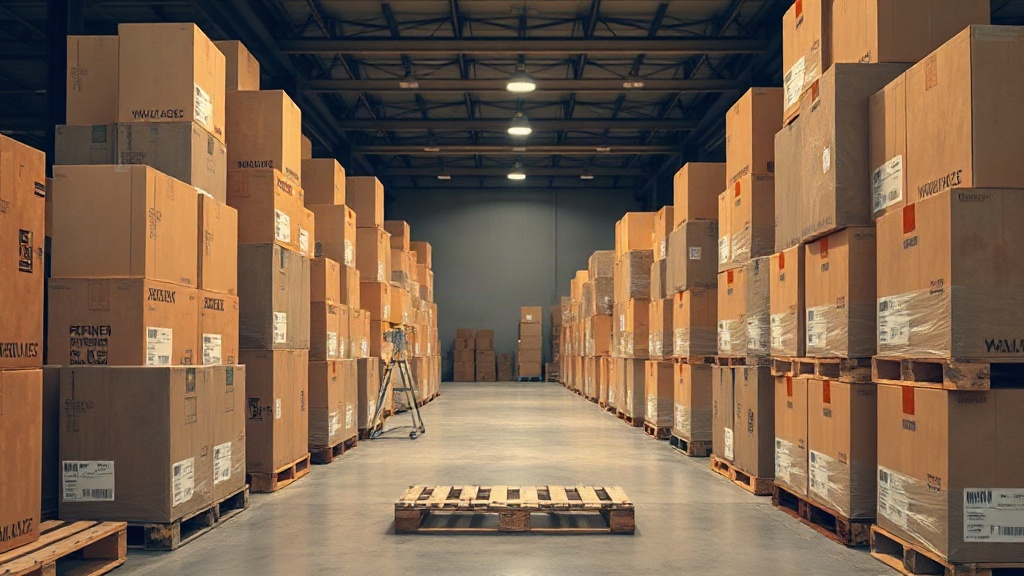
Wholesale perfume in Dallas, TX means sourcing fragrance inventory in bulk directly from verified B2B suppliers and distributors, rather than buying single units at retail. Buyers order by case, carton, or pallet, negotiate minimum order quantities and payment terms, and route freight through the Dallas-Fort Worth logistics corridor that serves North Texas retailers, distributors, and import businesses. A dependable wholesale partner combines authenticated product sourcing, flexible order formats, and consistent shipping so retailers can build a profitable, well-rounded fragrance assortment without holding excess inventory risk.
Summary
- Dallas-Fort Worth's central logistics position makes it a practical hub for B2B fragrance buyers stocking stores across Texas and the broader South Central region.
- Minimum order quantities typically scale with product format — single units, multi-piece sets, and mixed cartons all carry different thresholds and lead times.
- A sound procurement process includes sample verification, documented authenticity checks, clear payment terms, and a written freight plan before the first bulk order ships.
- Vetting a supplier on compliance documentation, communication responsiveness, and consistent fill rates matters more than chasing the lowest unit cost.
Why Dallas, TX Is a Strategic Hub for Wholesale Perfume Sourcing
Dallas-Fort Worth sits at the intersection of major interstate freight corridors and one of the busiest air cargo networks in the country, which is why so many wholesale fragrance buyers route their sourcing through the metro area. For a retailer, distributor, or importer stocking multiple storefronts or an e-commerce warehouse, that connectivity translates into shorter transit windows, more carrier options, and easier consolidation of mixed pallet shipments coming from overseas or domestic suppliers.
Beyond transportation, Dallas has a dense concentration of beauty and personal care wholesalers, discount retailers, and import-export businesses, which means local buyers can benchmark suppliers against a competitive regional market rather than relying on a single distant source. This is particularly relevant for businesses that want to diversify their supplier base and reduce dependency on any one vendor for inventory continuity.
Dallas's central position within the continental United States also makes it a practical fulfillment base for retailers running e-commerce alongside physical stores. A single regional warehouse near Dallas can reach a large share of the U.S. population within a short ground-shipping window, which is a meaningful advantage for wholesale buyers who plan to redistribute inventory to secondary markets rather than sell exclusively from one location.
Understanding Minimum Order Quantities (MOQs) for Wholesale Fragrance Buyers
Minimum order quantities are one of the first things a B2B buyer needs to understand before requesting a quote. Wholesale fragrance suppliers generally structure MOQs around case packs rather than individual pieces, and the threshold often depends on the product format being ordered. A supplier may set a lower entry point for a single fragrance line and a higher one for mixed assortments that include multiple concentrations or packaging sizes.
Format also affects how MOQs are calculated. Buyers evaluating a 38ml perfume format for compact retail displays or gift-with-purchase programs will typically see different case configurations than those ordering a 50ml perfume format intended for standard shelf placement. Buyers who want variety without committing to a full case of any single SKU often start with curated multi-piece sets, which can be a practical way to test sell-through before scaling a reorder.
Before submitting a purchase order, ask the supplier to confirm case pack size, whether mixed SKUs are allowed within one MOQ, and how reorder thresholds change once a buyer has an established purchase history. Suppliers that reward repeat business with more flexible order structures are generally easier to build a long-term relationship with.
Many wholesale suppliers also structure pricing in tiers tied to order volume, so buyers who commit to larger or more frequent purchases can access improved terms over time. Rather than negotiating a single static MOQ, it's worth asking a prospective supplier how their pricing and minimums evolve as a buyer's order history grows, since that trajectory matters more for long-term profitability than the terms of a first order alone.
The B2B Procurement Process: From Inquiry to Delivery
A structured procurement process protects both the buyer and the supplier, and it typically follows a predictable sequence: initial inquiry and catalog review, sample request, formal quote, purchase agreement, production or pick-and-pack, freight booking, and delivery with accompanying documentation. Skipping steps — particularly the sample and documentation stages — is the most common reason wholesale relationships break down after the first order.
Requesting Samples and Verifying Authenticity
Before committing to a bulk purchase order, request samples of the specific SKUs under consideration and compare batch coding, packaging quality, and box printing against what the supplier represents in their catalog. Reputable wholesale suppliers expect this step and should be able to provide supporting documentation on sourcing and authenticity without hesitation. If a supplier is reluctant to provide samples or documentation, treat that as a warning sign rather than a minor inconvenience.
Negotiating Payment Terms and Contracts
Payment terms in wholesale fragrance sourcing vary by order size and buyer history, ranging from prepayment on a first order to partial deposits with balance due before shipment, and eventually net terms for established accounts. Put agreed terms, lead times, and any return or shortage policy in writing before the order is placed. A clear written agreement is especially important for buyers who are importing across state or national borders, since it becomes the reference document if a shipment discrepancy needs to be resolved.
Confirming Freight and Delivery Details
Once terms are agreed, confirm who owns each leg of the shipment through agreed shipping terms, how tracking information will be shared, and what recourse exists if a shipment arrives short or damaged. Clarifying these details before the purchase order is finalized prevents disputes later and gives both sides a clear reference point if something goes wrong in transit.
What Determines Fragrance Quality in a Wholesale Assortment
Quality in a wholesale fragrance assortment starts upstream, with the raw materials and concentration levels used in each formulation. Ingredients such as bergamot, jasmine, and oud contribute to how a fragrance performs and how it is perceived by the end consumer, and buyers who understand these basics are better positioned to explain product differentiation to their own retail customers. Packaging materials, box construction, and finishing details also signal quality at a glance, which matters when a retailer is unboxing inventory in front of staff or photographing products for an online storefront.
Ask suppliers about concentration type, batch consistency, and how packaging is quality-checked before it ships. A supplier that can speak specifically to these details, rather than offering only generic marketing language, is more likely to deliver a consistent product across repeat orders.
Buyers should also ask how a supplier handles quality control on returns or damaged stock, since even well-packaged shipments can experience occasional transit damage. A supplier with a clear, documented process for replacing or crediting damaged units is signaling that they view quality as an ongoing commitment rather than a one-time claim made during the sales conversation.
Profit Margins and Positioning Your Fragrance Assortment
Wholesale buyers evaluate fragrance suppliers not just on unit cost but on how a product line supports overall margin across a category. A well-structured assortment mixes price tiers and formats so that faster-moving items help offset slower-moving specialty pieces, and so that a retailer isn't dependent on a single hero product to carry category performance. Margin planning should also account for freight, duties, and any returns allowance, since landed cost — not the wholesale unit price alone — is what ultimately determines profitability.
Retailers looking to differentiate from mass-market competitors often introduce a niche perfume collection alongside more familiar mainstream lines. Niche and designer-inspired fragrances can support a higher price position and stronger perceived value, which helps balance the margin structure of an assortment built primarily around everyday, higher-turnover items.
It also helps to think in terms of category role rather than individual SKU performance. Entry-price fragrances tend to build store traffic and repeat visits, while higher-tier and niche options contribute disproportionately to gross margin dollars even at lower unit volumes. Reviewing margin performance by category, rather than only by best-seller, gives a more accurate picture of which parts of the assortment are actually driving profitability.
Logistics, Freight, and Warehousing Considerations for Texas Retailers
Once an order is confirmed, freight planning becomes the next critical variable. Bulk fragrance shipments are typically palletized and shipped via LTL (less-than-truckload) freight for domestic moves, or consolidated into ocean or air containers for international orders before final-mile delivery within Texas. Buyers should confirm packaging standards for fragile glass components, since damage claims are far easier to resolve when cartons are properly cushioned and palletized before they leave the supplier's facility.
Warehousing is the other half of the equation. Fragrance inventory should be stored away from direct sunlight and extreme temperature swings, which can affect both the product and its packaging over time. Retailers running multiple locations across the Dallas-Fort Worth area often centralize receiving at one warehouse before redistributing to individual stores, which simplifies quality control and reduces the number of freight touchpoints per shipment.
Retailers should also plan for seasonal demand swings, since fragrance sell-through often increases around gifting periods. Placing orders early enough to account for standard freight transit times, rather than reordering only once shelf stock runs low, reduces the risk of stockouts during a store's highest-traffic weeks.
Navigating Customs, Compliance, and Import Regulations
For buyers importing fragrance products from outside the United States, customs compliance is a non-negotiable part of the sourcing process. Shipments typically require a commercial invoice, packing list, and country-of-origin documentation, and cosmetic and fragrance products may be subject to additional labeling requirements once they reach a U.S. port of entry. Working with a supplier experienced in export documentation reduces the risk of a shipment being held or delayed at customs.
It's worth confirming early whether the supplier handles export documentation directly or whether the buyer needs to coordinate with a separate customs broker. Buyers new to importing fragrance at scale often benefit from using a broker on the first few shipments, even if the supplier is capable of preparing documentation, simply to have an independent check on classification codes and duty calculations.
Buyers should also keep records of past shipments, including invoices and customs paperwork, in an organized system. Consistent documentation not only simplifies future orders with the same supplier but also makes it easier to respond quickly if a customs authority requests clarification on a specific shipment.
How to Vet a Reliable Wholesale Perfume Supplier
Reliability in a wholesale supplier shows up in details that are easy to overlook during the first conversation: how quickly they respond to inquiries, whether their catalog information matches what arrives in a sample shipment, and how transparent they are about lead times when demand is high. Ask prospective suppliers for references from other retail or distribution clients, and don't hesitate to ask directly about fill rates and how backorders are communicated.
Consistency matters more than any single order. A supplier that delivers the same quality, packaging, and documentation on the tenth order as they did on the first is a far more valuable long-term partner than one offering a marginally lower price with unpredictable service. For buyers building a recurring purchasing relationship, it's also worth asking whether the supplier can support growth — larger case packs, additional formats, or expanded SKU counts — as the buyer's own business scales.
It's also reasonable to start with a smaller trial order before committing to a supplier's full MOQ on a new fragrance line. A trial order lets a buyer evaluate packaging condition on arrival, invoice accuracy, and communication throughout the shipping process, all of which are better indicators of a long-term fit than a supplier's initial sales pitch.
Building a Balanced Wholesale Fragrance Assortment
A well-balanced wholesale assortment usually blends a few different product types: high-turnover mainstream fragrances that drive consistent traffic, a niche perfume tier that supports higher margins and differentiates the store from big-box competitors, and gifting-friendly options such as a curated perfume set for seasonal promotions. Rounding out the assortment with multiple size formats gives retail buyers flexibility to match price points across different customer segments and store formats.
Buyers should revisit their assortment mix on a regular cycle, using sell-through data from their own point-of-sale system to decide which formats and fragrance families to reorder versus phase out. Treating the wholesale relationship as a partnership, rather than a series of one-off transactions, makes it easier to get priority access to new releases and better support when demand shifts.
Retailers new to wholesale fragrance sourcing sometimes find it useful to start with a narrower core assortment and expand gradually as they learn which fragrance families and formats perform best with their specific customer base. Scaling an assortment deliberately, rather than ordering broadly across every available SKU on day one, keeps working capital tied up in inventory that's more likely to turn.
Frequently Asked Questions
What is the typical minimum order quantity for wholesale perfume?
Minimum order quantities vary by supplier and product format, and are usually structured around case packs rather than single units. Buyers should request specific MOQ details for each format they're considering, since compact sizes, standard sizes, and multi-piece sets are often configured differently.
Do I need a resale certificate to buy wholesale perfume in Texas?
Most wholesale suppliers require proof of business status, such as a resale certificate or business license, before extending wholesale pricing and terms. This documentation is standard practice across the wholesale beauty industry and helps suppliers confirm they are selling to a legitimate business rather than an individual consumer.
How long does shipping take from a wholesale fragrance supplier to Dallas?
Transit time depends on the shipment's origin and freight method. Domestic LTL freight within the U.S. generally moves faster than international ocean or air freight, and Dallas-Fort Worth's freight infrastructure typically supports efficient final-mile delivery once inventory clears customs or reaches a domestic distribution point.
How can I verify that a wholesale perfume supplier sells authentic products?
Request samples before placing a bulk order, compare batch coding and packaging against the supplier's catalog claims, and ask for sourcing documentation. A supplier that responds transparently to authenticity questions and can speak knowledgeably about their sourcing process is a stronger signal than pricing alone.