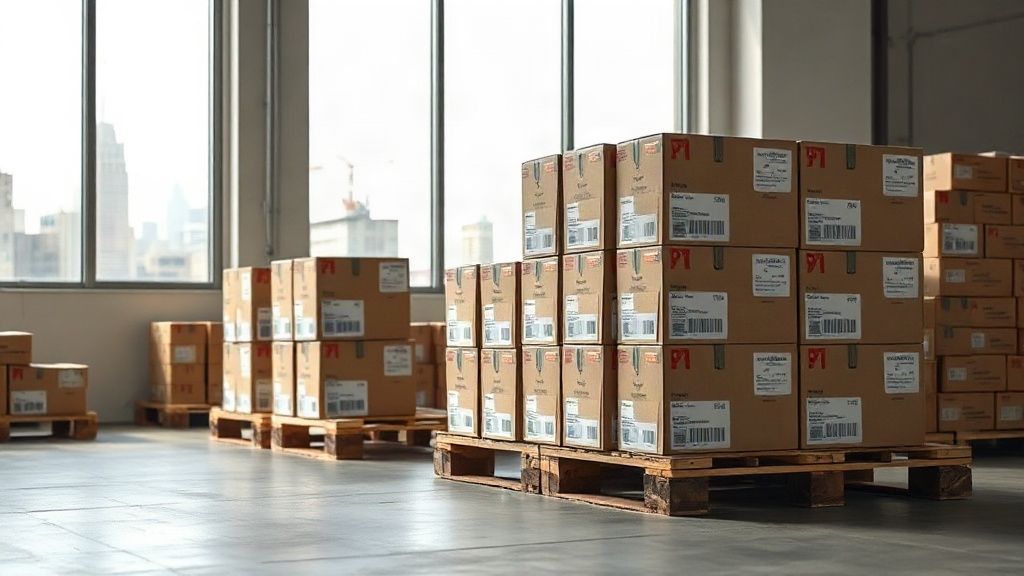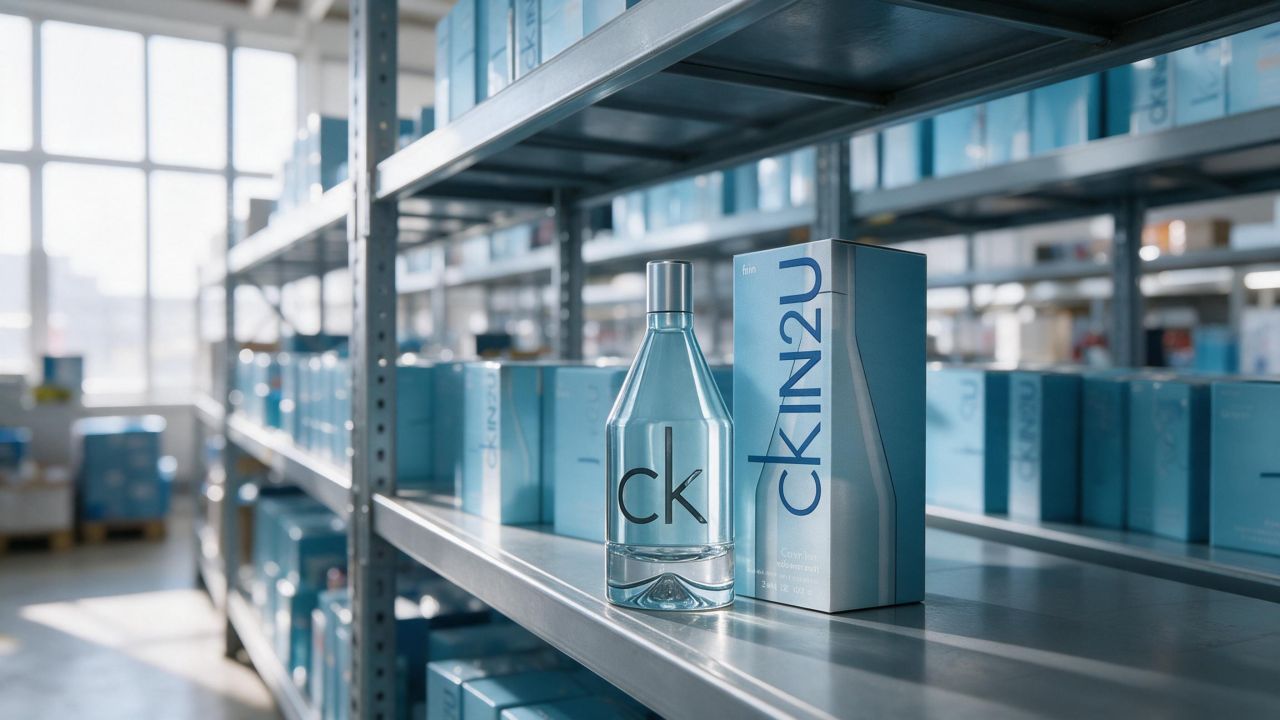
Perfume wholesale in New York means sourcing fragrances in bulk, at tiered unit pricing and defined minimum order quantities, from importers, brand distributors, or B2B fragrance houses that serve retailers, duty-free operators, gift shops, salons, and online resellers. For most buyers, the practical path is working with an established wholesale supplier who already holds import documentation, authentic stock, and flexible case-pack formats rather than trying to import directly from a single brand. The right partner should offer transparent order terms, consistent batch quality, and support for both small test orders and larger recurring programs.
Summary
- New York is a major entry point and distribution hub for wholesale fragrance due to its ports, airports, and dense retail/import network.
- Wholesale buyers should evaluate suppliers on MOQ, lead time, documentation, and total landed cost, not unit price alone.
- Margin planning must account for freight, duties, insurance, and storage, since these can shift true cost per unit significantly.
- A mixed assortment across sizes and categories, including sets, 38ml and 50ml formats, and niche lines, typically performs better than a single-SKU order.
What "Perfume Wholesale in New York" Really Means for B2B Buyers
When buyers search for perfume wholesale in New York, they are usually looking for one of three things: a local showroom or distributor they can visit in person, an import partner who can clear goods through the Port of New York and New Jersey or JFK air cargo, or an online B2B supplier that ships nationwide from a New York-based or New York-connected warehouse. All three models exist in the market, and each has different implications for minimum order size, payment terms, and how quickly inventory reaches your shelves.
For a retailer or distributor evaluating options, the first question is not who has the lowest price, but who can reliably deliver the volume and mix you need, on a schedule you can plan around. Wholesale fragrance is a repeat-purchase category — buyers who get this relationship right typically reorder from the same supplier for years, while buyers who chase the cheapest single quote often end up juggling multiple unreliable sources and absorbing the cost of stockouts or inconsistent batches.
It is also worth separating true wholesale from liquidation or closeout sourcing. Wholesale partners maintain ongoing catalogs, consistent packaging, and predictable restock cycles. Liquidation lots can look attractive on price but rarely support a repeatable retail program, since availability and assortment change with every batch.
Why New York Is a Strategic Hub for Wholesale Fragrance Sourcing
New York's position as a wholesale fragrance hub comes down to infrastructure: the Port of New York and New Jersey is one of the busiest container ports on the East Coast, JFK International Airport handles significant high-value air cargo, and the metro area has one of the densest concentrations of importers, distributors, and retail buyers in the country. For a business buying in bulk, this means shorter inland transit after customs clearance, more supplier options within a reasonable radius, and easier access to in-person meetings, trade shows, and sample viewings before committing to a larger order.
Many national retail chains and independent boutiques alike route at least part of their fragrance purchasing through New York-connected suppliers simply because the logistics infrastructure shortens the gap between placing an order and having stock on the shelf. This concentration also creates competitive pressure among suppliers, which tends to benefit buyers who do their homework: a supplier operating in or shipping through the New York market generally has to compete on reliability and documentation, not just price, because buyers have alternatives close by. For buyers outside the immediate metro area, a New York-connected supplier can still function as a reliable sourcing hub, since nationwide freight networks make it straightforward to receive pallet or case-pack shipments regardless of where your own warehouse or storefront is located.

How the Wholesale Procurement Process Works
Most B2B perfume purchases follow a similar sequence regardless of supplier location: request a catalog or price list, request samples or a small trial order, confirm minimum order quantity and case-pack sizes, negotiate payment and shipping terms, place the order, and set a cadence for reorders. Buyers who skip the trial-order step often discover packaging or batch inconsistencies only after committing to a full pallet.
Minimum Order Quantities (MOQ)
MOQ in fragrance wholesale is usually set at the case-pack level rather than per unit, since mixed boxes complicate picking and freight costs. A new buyer should ask whether the MOQ can be met with a mixed assortment across SKUs rather than a single fragrance, since this reduces inventory risk while you test sell-through in your own market. Suppliers that allow assortment-based MOQs are generally easier to work with for first-time or seasonal buyers.
Lead Times and Order Cycles
Lead time depends on whether stock is already held domestically or needs to be imported per order. Domestically stocked inventory can often ship within days, while made-to-order or direct-import arrangements may take several weeks once customs clearance and inland freight are factored in. For retailers planning seasonal promotions or holiday assortments, it is worth confirming lead times at least one full order cycle in advance, since fragrance demand spikes predictably around major gifting periods.
Calculating Margins and Total Landed Cost
Margin planning in wholesale fragrance should start from landed cost, not the quoted unit price. Landed cost includes the unit price, inbound freight, insurance, customs duty, brokerage fees, and any warehousing or handling charges before the product reaches your own shelf or fulfillment center. Two suppliers quoting the same unit price can produce very different actual margins once these variables are included.
Beyond Unit Price: Freight, Duties, and Customs
Freight cost per unit drops significantly as order volume increases, which is one reason larger, less frequent orders often outperform smaller, more frequent ones on a per-unit basis, provided your storage and cash flow can support it. Duties and customs fees vary by country of origin and product classification, so buyers importing internationally should confirm tariff classification with their supplier or broker before finalizing volume commitments. Buyers sourcing from a supplier who already holds goods in the United States avoid this exposure entirely, since duties were cleared on the supplier's side.
It is also worth building a small buffer into margin calculations for damaged or mislabeled units, which happen even with reputable suppliers at low single-digit rates. A supplier with a clear replacement or credit policy for such cases is generally a better long-term partner than one offering a marginally lower price with no such policy.
Logistics, Customs, and Import Compliance for Wholesale Perfume Shipments
Fragrance is classified as a dangerous good for transport purposes because of its alcohol content, which affects how it can be shipped, particularly by air. Buyers should confirm with any supplier or freight forwarder that shipments are packed and labeled according to applicable dangerous goods regulations, since non-compliant shipments can be delayed or rejected at customs or by the carrier.
For international wholesale purchases, buyers should also confirm that the supplier provides proper commercial invoices, packing lists, and country-of-origin documentation. These documents are required for customs clearance and also protect the buyer in the event of a dispute over authenticity or condition on arrival. A supplier unwilling or unable to provide standard trade documentation is a signal to look elsewhere, regardless of how attractive the pricing appears. Buyers working with a freight broker for the first time should also ask who is responsible for filing the import entry, who carries insurance during transit, and what happens if a shipment is held for inspection, since delays at this stage can ripple into stockouts on the retail side.
Storage conditions matter after arrival as well. Fragrance should be kept away from direct heat and sunlight, and buyers managing their own warehousing should factor climate-controlled storage into their cost model if they are holding inventory for extended periods, since heat exposure can affect both scent stability and packaging integrity. Buyers without their own climate-controlled space should ask whether a supplier can hold confirmed orders under proper conditions and release them in smaller batches, rather than receiving a full shipment that must then be stored under suboptimal conditions.
Choosing a Reliable Wholesale Perfume Supplier
Supplier selection is the single highest-leverage decision in a wholesale fragrance program, because it determines not just cost but consistency, authenticity, and how much operational risk you carry. A reliable B2B supplier should be able to answer specific questions clearly: where the stock originates, how batches are tracked, what the return or defect policy is, and what documentation accompanies each shipment. It is also reasonable to ask how a supplier handles seasonal demand spikes, since a partner who can only service steady, predictable order volumes may struggle to support a retailer scaling up for a holiday promotion or a distributor onboarding several new accounts at once. Treat the first conversation with a prospective supplier as a two-way evaluation: a supplier confident in their own quality and documentation will generally welcome detailed questions rather than deflect them.
Questions to Ask Before Placing a First Order
- Can the supplier provide samples or a small trial order before a full case-pack commitment?
- What is the MOQ, and can it be met with a mixed assortment rather than a single SKU?
- What documentation accompanies each shipment, and is it compliant with destination-country import requirements?
- What is the policy for damaged, mislabeled, or short-shipped units?
- How consistent is packaging and batch presentation across repeat orders?
Warning Signs to Avoid
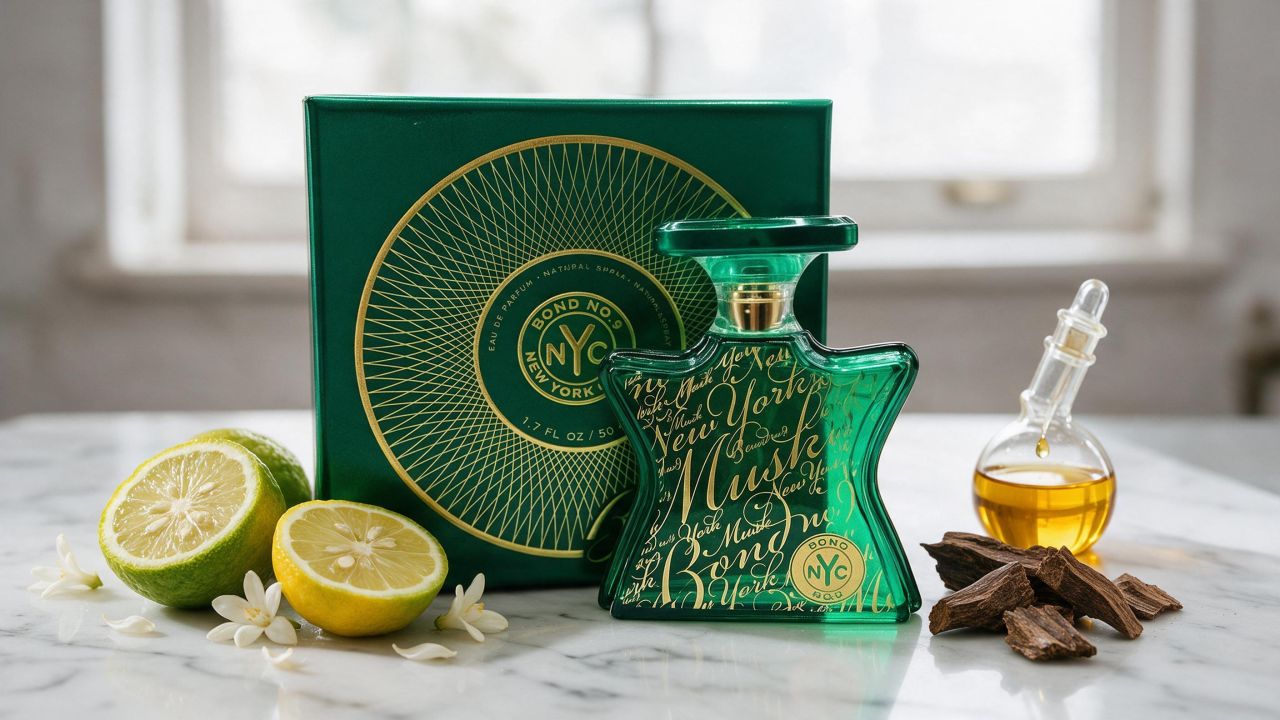
Be cautious with suppliers who refuse to provide any documentation, pressure immediate full-volume commitments without a trial order, or offer pricing far below the rest of the market with no clear explanation. These patterns are common among sellers of diverted, expired, or inauthentic stock, and the short-term savings rarely offset the long-term damage to a retail reputation. For buyers who want a curated, higher-margin category alongside mainstream volume lines, exploring a supplier's niche perfume selection is a reasonable way to gauge whether they maintain quality standards across their full catalog, not just their best-known SKUs.
Building a Profitable Assortment: Formats, Sets, and Niche Lines
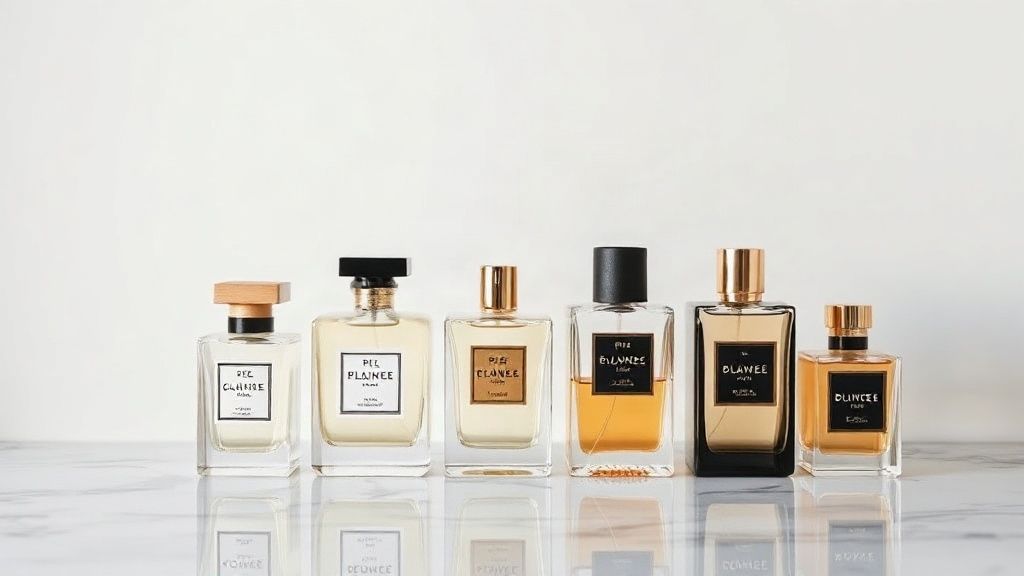
A well-built wholesale assortment spreads risk across formats and price tiers rather than concentrating an entire order in one size or category. Smaller formats generally move faster at point of sale and work well for impulse placement or gifting sections, while larger formats support a store's core fragrance wall and appeal to loyal repeat customers. Mixing both formats in a single order is usually more efficient than running separate orders for each.
Bundled formats also deserve a place in a wholesale buy. A well-curated perfume set assortment tends to perform strongly during gifting seasons and gives retail buyers a higher average order value without needing to introduce new single-SKU inventory risk. For buyers planning out their size mix, pairing a compact 38ml perfume range for travel and trial-size placement with a 50ml perfume line for everyday full-size sales is a practical way to cover both lower-ticket impulse buyers and higher-ticket regulars within the same order.
Working with Beyazit Parfum as Your Wholesale Partner
For retailers, distributors, and importers evaluating perfume wholesale in New York and beyond, the practical priority is a supplier that can combine consistent stock, clear documentation, and a catalog broad enough to support a full retail assortment rather than a single narrow offer. Beyazit Parfum works with B2B buyers across these needs, supporting trial orders for new accounts, structured reorder cycles for established partners, and a catalog that spans everyday volume formats and more curated niche selections so a single order can cover multiple sections of a retail floor.
Buyers planning their first wholesale program are encouraged to start with a trial order across a mixed assortment, confirm documentation and packaging quality on arrival, and build a reorder schedule from there rather than committing a large volume to a single untested SKU. This approach protects cash flow and gives a clearer, faster read on which formats and fragrances actually convert in your specific market before scaling the commitment.
Frequently Asked Questions
What is a typical minimum order quantity for perfume wholesale?
MOQs vary by supplier and are usually structured around case-pack sizes rather than individual units. Many suppliers allow the minimum to be met with a mixed assortment across several fragrances and formats, which is generally preferable for buyers testing a new market or category.
Do I need an import license to buy perfume wholesale?
Requirements depend on whether you are importing directly from overseas or purchasing from a supplier who already holds stock domestically. Buyers sourcing from a domestically stocked wholesale supplier typically avoid direct import and customs responsibilities, since those steps were handled on the supplier's side before the sale.
How can I verify that wholesale perfume stock is authentic?
Ask for supplier documentation including invoices and batch or lot information, request samples before a full order, and compare packaging and batch codes against known reference points. Suppliers unwilling to provide this information, or offering pricing dramatically below market norms, should be treated with caution.
What size formats sell best in a wholesale retail assortment?
Most retail assortments benefit from a mix rather than a single size. Smaller formats support impulse and trial placement, larger formats serve core repeat buyers, and bundled sets perform well during gifting periods, combining several formats in one order typically outperforms a single-size commitment.