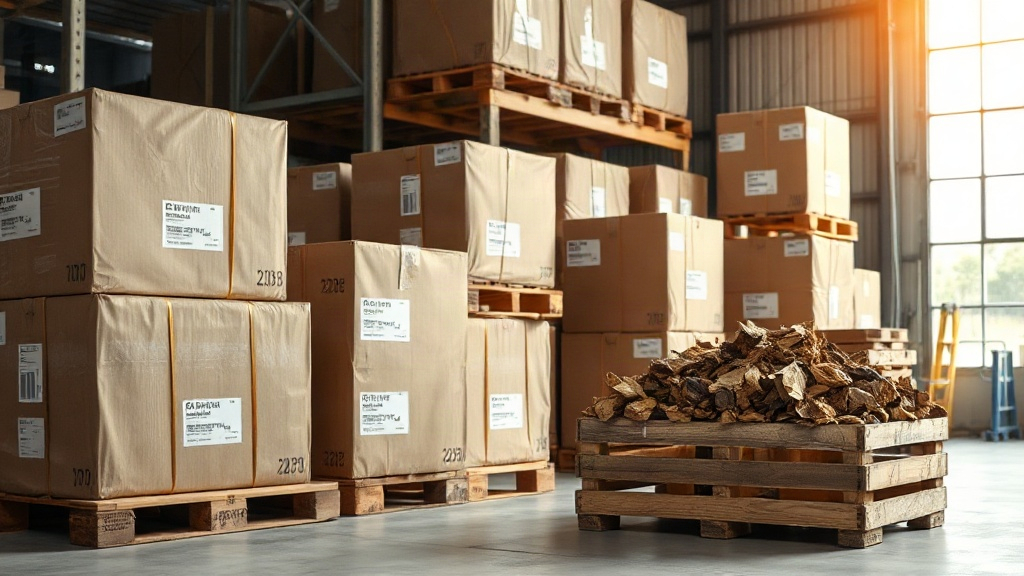
Perfume for wholesale means buying fragrance in bulk, at tiered unit pricing, directly from manufacturers, authorized distributors, or export-focused suppliers rather than at retail price. For retailers, distributors, and importers, sourcing perfume for wholesale involves negotiating a minimum order quantity, verifying supplier authenticity and export documentation, and agreeing on shipping terms before placing a purchase order. Done correctly, it gives a business access to fragrance inventory at a cost structure that supports healthy resale margins.
Summary
- Buying perfume for wholesale means sourcing fragrance directly from manufacturers, licensed distributors, or export-focused suppliers at bulk pricing tiers, typically bound by a minimum order quantity (MOQ).
- Reliable wholesale suppliers provide authenticity documentation, batch traceability, and export paperwork that retailers, distributors, and importers need for customs clearance.
- Margins, shipping terms (Incoterms), and customs classification directly affect your landed cost, so they must be negotiated before you commit to a purchase order.
- A long-term wholesale partnership — not a one-off purchase — is what protects your business against stock shortages, price volatility, and authenticity disputes.
What "Perfume for Wholesale" Means for B2B Buyers
Perfume for wholesale refers to fragrance purchased in bulk quantities, at prices scaled to volume, directly from a manufacturer, brand-authorized distributor, or specialized export supplier — rather than from retail shelves. For a retailer, distributor, or importer, the term describes an entire purchasing relationship: agreed unit pricing tied to order volume, a minimum order quantity, defined lead times, and export documentation that allows the goods to move across borders and clear customs legally. Unlike a single retail purchase, a wholesale perfume order is a business transaction with contractual terms, not a shopping trip.
This distinction matters because the wholesale fragrance market serves several different buyer profiles at once. A boutique retailer might need a curated assortment of a few hundred units per quarter. A regional distributor might need container-level volumes with private-label packaging options. An importer entering a new market might prioritize documentation and compliance over unit price. Understanding which profile matches your business — and communicating that clearly to a supplier — is the first step toward a wholesale perfume deal that actually works for your operation.
Types of Wholesale Perfume Suppliers: Manufacturers, Distributors, and Importers

Not every "wholesale perfume supplier" occupies the same position in the supply chain, and the position matters for pricing, minimum orders, and product range. Recognizing which category a prospective partner falls into helps a buyer set realistic expectations for cost, lead time, and catalog depth before any negotiation begins.
Manufacturers and brand owners produce fragrance in-house or through contracted perfumeries, then sell both directly and through distribution networks. Buying closer to the manufacturer generally means better unit economics, but often comes with higher MOQs and longer production lead times, especially for private-label or custom-formulated lines.
Authorized distributors and export houses hold stock across a portfolio of brands and fragrance families, allowing a buyer to consolidate multiple product lines into a single purchase order and a single shipment. This is usually the most practical entry point for retailers and smaller distributors who need variety without managing relationships with dozens of individual manufacturers.
Importers and regional wholesalers sit closer to the end market, holding local stock and offering shorter lead times, smaller MOQs, and local-currency invoicing — often at a price premium compared to buying at the source.
Popular Bottle Sizes and Assortment Formats for Wholesale Orders
Wholesale buyers rarely order a single format. A balanced assortment typically mixes travel and gifting sizes with standard retail sizes, so the range performs well across different shelf positions and price points. Many wholesale catalogs organize their 38ml perfume range for smaller-format retail and gifting needs alongside a broader 50ml perfume line for standard retail placement. Reviewing both formats before finalizing an order helps a buyer match assortment to shelf space and customer demand rather than defaulting to whatever the supplier has most readily in stock.
Buyers who want to differentiate their assortment from mass-market retailers often look beyond designer-inspired lines toward a curated niche perfumes collection, since niche and artisanal fragrance families typically carry higher perceived value and support stronger retail margins even at moderate order volumes.
How to Evaluate a Wholesale Perfume Supplier
Fragrance is a category where authenticity, ingredient sourcing, and regulatory compliance carry real business risk. A wholesale buyer who skips supplier vetting is exposed to counterfeit stock, inconsistent batches, and shipments that get held at customs. Evaluating a supplier properly before the first purchase order protects both your capital and your brand reputation with end customers.
Licensing, Authenticity, and Documentation
Ask any prospective supplier for proof of authorization to sell the brands or formulations in their catalog, along with batch-level traceability. Legitimate wholesale suppliers can typically provide a certificate of origin, a commercial invoice template, safety data sheets (SDS) for the fragrance concentrate, and — where relevant — IFRA compliance statements. If a supplier is reluctant to share this documentation before a deal is signed, treat that as a warning sign rather than a formality to chase down later.
Product Range and Assortment Depth
A supplier's catalog breadth tells you how much of your assortment planning they can support in a single relationship. Some buyers need a wide range of designer-inspired scents to serve broad retail demand; others need a tighter, curated range — including gift-ready perfume set options — to serve gifting seasons or hospitality and corporate-gifting channels. Matching supplier range to your actual sales channels avoids the common mistake of over-ordering categories that move slowly on your shelves.
Communication, Sampling, and Responsiveness
Before committing to a full container or pallet order, request physical samples and a clear response on lead times, defect policy, and reorder timelines. A supplier's responsiveness during the sampling stage is a strong predictor of how they will handle a real order when something goes wrong — a delayed shipment, a damaged pallet, or a mislabeled carton.
Minimum Order Quantities (MOQ) and Wholesale Pricing Structures
Minimum order quantity is the single factor that most determines whether a wholesale perfume relationship is realistic for your business size. MOQs in the fragrance trade vary widely depending on the supplier's position in the supply chain, the packaging format, and whether the order includes private labeling.
Pricing in wholesale fragrance is almost always tiered: unit cost decreases as order volume increases, often in defined bands (for example, a lower per-unit price above a certain carton count, and a further discount above a pallet or container threshold). Buyers should ask suppliers for the full tier table rather than a single quoted price, since the difference between the first and second pricing tier is sometimes reachable with only a modest increase in order size.
It is also worth clarifying, before ordering, whether quoted pricing is:
- Ex-works (EXW), meaning the price covers only the goods at the supplier's facility, with all freight and export handling added afterward.
- FOB (Free on Board), meaning the supplier covers costs up to loading the goods onto the shipping vessel or aircraft.
- Landed cost, meaning freight, insurance, and duties are already factored in — useful for buyers who want to compare offers on a like-for-like basis.
Comparing two supplier quotes without normalizing for these terms is one of the most common pricing mistakes new wholesale buyers make, since an apparently cheaper EXW quote can end up costing more once freight and duties are added.
Logistics, Shipping, and Customs for Wholesale Perfume Orders

Perfume is classified as a regulated good in most jurisdictions because it typically contains alcohol and, depending on formulation, flammable components. This affects how it can be packed, labeled, and transported, and it is one of the most overlooked parts of a first wholesale order.
International Shipping and Incoterms
Air freight is faster but more expensive and often subject to dangerous-goods surcharges because of the alcohol content in most fine fragrance formulations. Sea freight is the standard choice for larger wholesale volumes — pallet or container loads — and is considerably more cost-efficient per unit, though it requires longer lead-time planning. Buyers should agree on Incoterms (EXW, FOB, CIF, DDP, etc.) explicitly in the purchase order, since this determines who is responsible for freight booking, insurance, and risk during transit.
Customs Classification and Documentation for Perfume
Perfume typically falls under a specific Harmonized System (HS) code range for toilet preparations and cosmetics, and correct classification affects the duty rate applied at import. A reliable supplier should be able to confirm the HS code they use on export documentation, along with providing a commercial invoice, packing list, and — for markets that require it — a certificate of free sale or import permit. Buyers importing into markets with stricter alcohol-based product rules should also confirm labeling requirements (ingredient declarations, batch codes, and volume markings) before the shipment leaves the origin country, since relabeling after arrival is far more costly than confirming compliance up front.
Profit Margins and Retail Positioning for Wholesale Perfume Buyers

Margin planning for wholesale fragrance should start with landed cost, not the quoted unit price. Landed cost includes the product price, freight, insurance, customs duty, and any local taxes or handling fees incurred before the stock reaches your warehouse. Only once landed cost is known can a retailer or distributor set a retail or resale price that protects margin while remaining competitive in the local market.
Assortment strategy also affects achievable margin. Designer-inspired and mass-market fragrance lines tend to have thinner margins because end customers can easily price-compare them against other retailers. Niche and artisanal fragrance families, along with curated gift sets, generally support stronger margins because they are harder for end customers to comparison-shop and often carry a stronger gifting or occasion-driven purchase motivation. Buyers building a wholesale assortment from scratch often blend both categories deliberately: designer-inspired lines to drive footfall and repeat purchase, and niche or set-based products to protect overall margin.
Seasonality is another factor that is easy to underestimate. Gifting seasons drive disproportionate demand for boxed sets and premium packaging, while everyday fragrance sizes sell more evenly across the year. Planning purchase orders around this seasonality — rather than ordering a flat assortment year-round — is one of the more reliable ways wholesale buyers improve inventory turnover and reduce markdown risk.
Building a Long-Term Wholesale Partnership
A single successful order does not guarantee a reliable supply chain. The buyers who get the most value from wholesale perfume sourcing treat the relationship as ongoing rather than transactional, which typically means agreeing on reorder timelines in advance, maintaining open communication about upcoming demand shifts (a new store opening, a seasonal promotion), and reviewing supplier performance after each shipment rather than only when something goes wrong.
It is also worth negotiating flexibility into the relationship as volume grows: better payment terms, dedicated account support, or early access to new product lines are all reasonable requests once a buyer has demonstrated consistent order volume. Suppliers generally prefer predictable, recurring buyers over one-time high-volume orders, and are often willing to extend better terms to secure that predictability.
Finally, diversifying supply — even modestly — protects against disruption. Relying on a single supplier for an entire assortment leaves a business exposed if that supplier faces a production delay, a shipping disruption, or a change in export policy. Many established retailers and distributors maintain a primary supplier relationship alongside a smaller secondary source, specifically to keep the business resilient during unexpected supply shocks.
Sourcing perfume for wholesale is ultimately about matching supplier capability to your business model: the right minimum order quantity, transparent pricing tiers, complete export documentation, and a shipping plan that accounts for customs realities. Buyers who treat these factors as part of the purchasing decision — rather than details to resolve after the order is placed — build fragrance assortments that are both profitable and dependable over multiple ordering cycles.
Frequently Asked Questions
What is a typical minimum order quantity for wholesale perfume?
Minimum order quantities vary by supplier type and packaging format, ranging from smaller carton-level minimums offered by distributors and regional wholesalers to larger pallet or container minimums typical of manufacturers and export-focused suppliers. Always request the exact MOQ and pricing tiers in writing before planning cash flow around an order.
Can retailers buy niche or designer-inspired perfume in bulk?
Yes. Wholesale suppliers generally carry both designer-inspired lines, which serve broad retail demand, and niche or artisanal fragrance collections, which support stronger margins and differentiated positioning. Reviewing a supplier's full catalog helps buyers build an assortment that balances volume and margin.
How long does international shipping take for a wholesale perfume order?
Lead times depend on the shipping method and destination. Air freight is faster but costlier due to dangerous-goods handling for alcohol-based fragrance, while sea freight is more economical for large volumes but requires longer advance planning, including time for customs clearance at the destination port.
What documents are needed to import wholesale perfume through customs?
Typical requirements include a commercial invoice, packing list, certificate of origin, and correct Harmonized System (HS) code classification for cosmetics and toilet preparations. Depending on the destination market, additional documentation such as a certificate of free sale, safety data sheets, or ingredient labeling compliance may also be required, so confirming requirements with the supplier before shipment is essential.