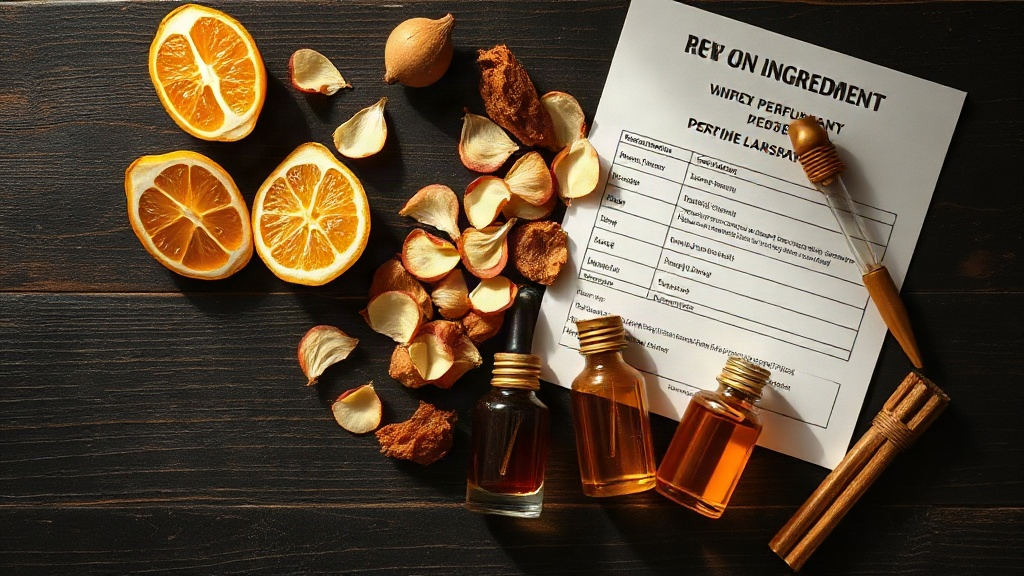
Wholesale perfume oil is concentrated, alcohol-free fragrance sold in bulk — typically starting at one kilogram, several liters, or a case of pre-filled units — directly to retailers, distributors, importers, and private-label brands rather than to individual shoppers. Buying at this level cuts the per-unit cost sharply versus retail bottles, but it shifts responsibility for storage, dilution or bottling, labeling, and import compliance onto the buyer. For a B2B buyer, the real decision is not just "who has the lowest quote," but which concentration grade, minimum order quantity, and supplier relationship actually fits the channel you sell into.
Summary
- Wholesale perfume oil is priced in bulk tiers (by kilogram, liter, or case) rather than single-unit retail pricing, and MOQs vary widely by supplier and concentration.
- Concentration grade — pure oil concentrate, EDP-equivalent blend, or attar/dehn-style oil — determines dilution needs, shelf life, and which retail channel the final product suits.
- Landed cost is product cost plus freight, duties, and compliance testing — margin planning has to start from that number, not the factory quote.
- Supplier vetting (documentation, batch consistency, communication, lead times) matters more for recurring wholesale orders than the lowest price per unit.
What Counts as "Wholesale" in the Perfume Oil Trade?
In the fragrance trade, "wholesale" is less about a fixed quantity and more about who the sale is structured for. A wholesale perfume oil transaction is built around a business buyer — a retail chain, an independent perfume shop, a gift-set assembler, an online private-label seller, or a regional distributor — who intends to resell, repackage, or incorporate the oil into a finished product. Pricing is tiered by volume, payment terms are typically invoice- or deposit-based rather than instant checkout, and the supplier expects an ongoing relationship rather than a one-time purchase.
This distinguishes wholesale perfume oil from two adjacent markets buyers sometimes confuse it with. The first is raw essential oils and aroma chemicals, which are unformulated inputs used by compounders to build a fragrance from scratch. The second is finished, boxed retail perfume sold at consumer volume. Wholesale perfume oil sits between the two: it is already a finished, wearable fragrance concentrate — often an oil-based interpretation of a designer or niche scent, or a house's own composition — supplied in bulk format so the buyer can bottle, label, and sell it under their own program or alongside their existing catalog.
Buyers typically fall into a few recognizable categories: perfume and cosmetics retailers restocking a bulk-oil counter or private-label line, distributors supplying smaller shops across a region, importers bringing concentrate into a market where finished perfume import duties are higher than raw concentrate duties, and e-commerce sellers building a house brand around pre-filled rollerballs or small vials. Each of these buyer types has different priorities — a distributor cares most about consistent lead times across repeat orders, while a private-label seller cares more about scent accuracy and batch-to-batch consistency.
Perfume Oil Concentrations and Quality Grades Buyers Should Know

Before negotiating price, a wholesale buyer needs to understand what grade of oil is actually being quoted, because this single variable drives dilution ratios, shelf life, packaging compatibility, and which end customer the finished product will suit.
Oil-Based Concentrates vs. Alcohol-Based Formats
Most products sold as "wholesale perfume oil" are oil-based concentrates: the fragrance compound is carried in a neutral base oil (commonly fractionated coconut oil, jojoba, or a mineral-oil equivalent) instead of ethanol. This format is longer-wearing on skin, has no evaporation flash, and is popular in markets that prefer alcohol-free wear for religious, sensitivity, or climate reasons. By contrast, alcohol-based perfume concentrate (sometimes offered wholesale as a perfumer's base or "juice") is meant to be cut with perfumer's alcohol and water before bottling as a conventional eau de parfum or eau de toilette. Buyers who plan to fill rollerball or attar-style bottles need the oil-based format; buyers building a conventional spray-bottle range need the alcohol-ready concentrate — these are not interchangeable, and asking a supplier for the wrong one is one of the most common sourcing mistakes new wholesale buyers make.
Grading, Longevity, and Batch Consistency
Within oil-based concentrates, quality varies by compound density and the ratio of natural extracts to synthetic aroma molecules. Higher-grade concentrates hold scent accuracy closer to the original reference and project longer on skin or fabric; lower grades fade faster and can drift off the intended profile after a few hours. Because wholesale buyers are reselling a promise of consistency, it is worth asking any prospective supplier for a reference sample against a known benchmark and, ideally, a second sample from a different production batch a few weeks later. A supplier who cannot reproduce the same scent profile batch to batch is a liability for a retailer trying to build repeat customers around a specific product.
How the Wholesale Supply Chain Works: MOQs, Lead Times, and Private Label
Once the concentration grade is settled, the next variables that shape a wholesale relationship are order size, turnaround time, and how much customization the supplier allows.
Minimum Order Quantities and Tiered Pricing
Minimum order quantities for perfume oil vary by supplier size and production method. Smaller specialty producers may set an MOQ per scent at a kilogram or a few liters; larger manufacturers often require a higher combined volume across a product line but allow more flexibility in blending multiple scents into one shipment. Pricing is almost always tiered — the cost per unit of volume drops as the order size increases, which is why many distributors plan annual purchasing in a small number of larger orders rather than frequent small top-ups. A buyer evaluating two quotes should compare at the same tier, not the headline "starting from" price, since the lowest advertised tier rarely matches the volume a growing retail or distribution business actually needs.
Private Label and Custom Blending
Many wholesale perfume oil suppliers also offer private-label programs: unbranded concentrate that the buyer bottles, labels, and sells under their own brand name, sometimes with a custom blend created to the buyer's brief. This is attractive for retailers who want a differentiated catalog rather than reselling a widely available formula, but it comes with longer lead times for the first order while the formula is finalized and approved, and often a higher MOQ than buying an existing stock blend. Buyers considering private label should budget extra weeks for sampling rounds and should get any agreed formula documented in writing before committing to a production-size order.
Calculating Margins: What Retailers and Distributors Need to Model
The quoted price per kilogram or liter is only the starting point for margin planning, not the number to build a retail or distribution price around. A realistic model adds freight (which scales very differently for oil shipped by air versus sea), import duties and any applicable taxes, compliance or safety testing where required, packaging and labeling costs if the oil arrives in bulk drums rather than pre-filled units, and a buffer for shrinkage during decanting or bottling. Only after landed cost is established does it make sense to layer on the markup needed to cover storage, staff time, marketing, and the retailer's or distributor's own margin target.
It is also worth separating fixed and variable costs when comparing suppliers. A supplier with a slightly higher per-liter price but lower freight cost (because they ship from a closer port, or offer consolidated shipping with other buyers) can land cheaper overall than a lower quote that requires expensive expedited freight to meet a launch date. Distributors running multiple SKUs should model landed cost per SKU rather than an average across the order, since concentration grade and packaging weight both affect freight allocation unevenly.
Logistics, Customs, and Import Compliance for Bulk Fragrance Oil

Moving bulk fragrance oil across borders involves more paperwork than a finished consumer product shipment, mostly because customs authorities need to classify the goods correctly and confirm they are not restricted or hazardous under local rules.
Shipping and Incoterms
Bulk perfume oil is typically shipped in sealed drums, jerry cans, or case-packed bottles depending on volume, and the buyer and supplier should agree Incoterms (such as FOB, CIF, or DDP) before the first order so it is clear who is responsible for freight, insurance, and customs clearance at each stage. First-time importers are generally better served by a DDP or CIF arrangement where the supplier or a freight forwarder manages more of the process, moving toward FOB once the buyer has an established customs broker and freight relationship of their own.
Customs Classification and Documentation
Perfume oil concentrates typically fall under a different customs tariff classification than finished alcohol-based perfume, which can mean a different duty rate depending on the importing country. Because some fragrance oils are classified as flammable or restricted depending on their flashpoint and carrier base, buyers should request a Safety Data Sheet (SDS) and any relevant compliance documentation from the supplier before shipping, and confirm with a customs broker or the relevant import authority how the specific product will be classified in their market. Getting this wrong does not just risk a fine — it can hold an entire shipment at port, which is far more costly to a distributor's cash flow and customer commitments than a slightly higher duty rate would have been.
Choosing a Reliable Wholesale Perfume Oil Supplier

Price is the easiest thing to compare between suppliers and often the least predictive of a good long-term partnership. For a business that will reorder the same oils every quarter, consistency, documentation, and communication matter more than shaving a small percentage off the unit cost.
Vetting Checklist
- Ask for reference samples and a second batch sample weeks later to confirm scent consistency, not just a single best-case sample.
- Request documentation — SDS, any relevant certifications, and country of origin — before placing a production order, not after.
- Clarify MOQs, tiered pricing, and lead times in writing, including what happens if a reorder is needed urgently.
- Ask how the supplier handles quality complaints or an off-batch, since this reveals more about reliability than any sales pitch.
- Start with a trial order sized to test the relationship before committing to the volume needed for the best pricing tier.
A supplier that answers these questions clearly and without pressure to skip steps is generally a better long-term partner than one offering the lowest price with the least documentation.
Matching Product Formats to Your Sales Channel
Bulk oil is only half of a wholesale buyer's catalog decision — the other half is choosing which finished formats to build around it for the shelf or storefront. Retailers assembling a gift-driven range often do well pairing bulk concentrate with a curated perfume set offering, which gives customers a ready-made multi-scent entry point without requiring the buyer to manage several single-SKU listings. Distributors targeting a more discerning, higher-margin customer base frequently look toward a niche perfumes line, since niche positioning tends to support a higher price point than mainstream designer-style alternatives. For buyers deciding on bottle size for their own retail or private-label fill, a 50ml perfume format is a common middle ground between travel-size trial units and full-size bottles, balancing unit cost against perceived retail value.
Whichever formats a buyer chooses, it is worth testing a small assortment across concentrations and sizes before committing warehouse space and marketing budget to a single configuration — regional preferences for oil-based versus spray formats, and for smaller versus larger bottle sizes, can vary significantly even within the same country.
Frequently Asked Questions
What is the typical minimum order quantity for wholesale perfume oil?
MOQs vary by supplier and concentration, ranging from roughly a kilogram or a few liters per scent with smaller specialty producers to larger combined-volume requirements with bigger manufacturers. Always confirm the MOQ and tiered pricing structure directly with the supplier before planning a purchase, since advertised "starting from" prices usually apply only at the highest volume tier.
Is wholesale perfume oil the same as alcohol-based perfume concentrate?
No. Wholesale perfume oil is typically carried in a neutral base oil and sold ready to fill into rollerballs or attar-style bottles, while alcohol-based perfume concentrate is meant to be diluted with perfumer's alcohol and water before bottling as a spray product. Buyers should confirm which format they are being quoted, since the two are not interchangeable in finished-product applications.
What documentation should I request before importing bulk fragrance oil?
At minimum, request a Safety Data Sheet (SDS), confirmation of country of origin, and any certifications relevant to your market. This documentation supports correct customs classification and helps avoid delays or holds at port, which are usually far costlier than the product itself.
How do I estimate true cost before setting a resale or distribution price?
Start from landed cost — product cost plus freight, duties, and any required compliance testing or packaging — rather than the quoted per-kilogram or per-liter price. Only after landed cost is confirmed should a markup be added to cover storage, staff time, marketing, and your target margin.