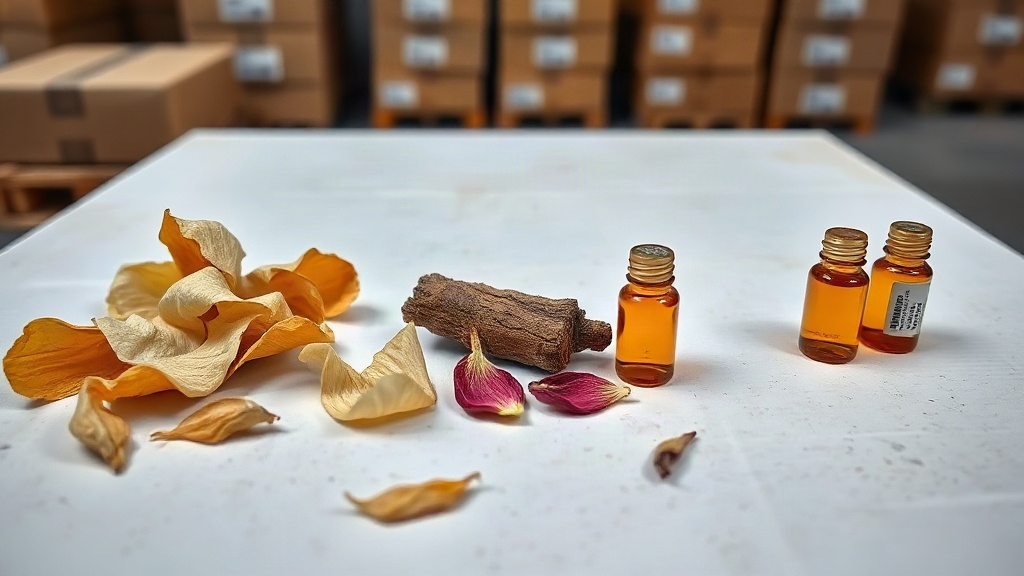
The best wholesale perfume oil suppliers combine consistent batch quality, transparent minimum order quantities, and clear compliance documentation such as safety data sheets and IFRA conformity certificates. There is no single "best" supplier for every business; the right partner depends on your order volume, target markets, and whether you need raw concentrates, ready-to-fill oils, or finished perfumes for retail. Wholesale buyers get the strongest results by comparing manufacturers, regional distributors, and B2B marketplaces side by side against a fixed set of decision criteria, rather than choosing on price alone.
Summary
- Evaluate suppliers on quality consistency, MOQ flexibility, documentation, and logistics, not price alone.
- Manufacturers, distributors, and B2B marketplaces each suit different order volumes and risk profiles.
- Payment terms and Incoterms can change the real cost of a quote as much as the unit price does.
- A long-term partner should support your product mix, from bulk oils to finished, retail-ready perfumes.
Understanding the Wholesale Perfume Oil Supply Chain
Before comparing suppliers, it helps to understand where wholesale perfume oils actually come from and how they move through the supply chain. Most fragrance oils sold at wholesale volume originate from a small number of aroma compound manufacturers and independent perfumers who blend raw materials, essential oils, aroma chemicals, and absolutes, into finished fragrance concentrates. These concentrates are then sold in bulk to brands, private-label businesses, and distributors, who either bottle them directly or dilute them further into alcohol-based eau de parfum or eau de toilette formats.
Perfume Oil vs. Alcohol-Based Fragrance
For B2B buyers, it matters whether you are sourcing pure oil concentrate for repackaging, or finished alcohol-based perfume ready for retail shelves. Oil concentrates typically have longer shelf lives, lower shipping restrictions in some regions, and more flexibility for private labeling, but they require in-house or contract bottling and quality control. Finished perfumes remove that step but limit how much you can customize the final product.
Where Wholesale Oils Actually Come From
Buyers should distinguish between three tiers of supply: primary manufacturers who formulate and produce the concentrate, secondary distributors who buy in bulk and resell in smaller wholesale lots, and marketplace resellers who aggregate multiple manufacturers under one storefront. Each tier changes your pricing, minimum order quantity, and the amount of direct quality control you have over the final product.
How Order Volume Shapes Your Sourcing Strategy
The right sourcing strategy also depends on where your business sits today. A new importer testing a single market may prioritize a distributor who accepts smaller trial orders, even at a higher per-unit cost, to validate demand before committing capital. An established retailer with predictable reorder cycles is often better served by a direct manufacturer relationship, since consistent volume unlocks better pricing tiers and priority production slots. Reassessing this fit periodically, rather than defaulting to the same supplier as your business grows, is one of the simplest ways to protect margin over time.
Key Criteria for Evaluating Wholesale Perfume Oil Suppliers
Once you understand the supply chain, the next step is applying a consistent evaluation framework. The following criteria are the ones that most directly affect margin, reliability, and long-term risk for a retailer, distributor, or importer.
Product Quality and Batch Consistency
Ask any prospective supplier for samples from at least two different production batches. Fragrance oils can drift in scent profile between batches if raw material sourcing or blending processes are not tightly controlled. A supplier that can explain their batch-testing process, and that offers consistent olfactory results across shipments, is a stronger long-term partner than one offering a lower price with no batch documentation.
Minimum Order Quantities and Pricing Structure
MOQs vary widely across the industry, from small trial quantities suited to a new importer testing a market, to large-volume contracts designed for established distributors. Rather than asking only "what's the price," ask how pricing scales with volume, whether there are tiered discounts, and what the reorder terms look like once you have an established relationship. A supplier with rigid, one-size-fits-all MOQs may not be the right fit if you are scaling gradually.
Certifications and Compliance Documentation
Fragrance oils sold across borders should come with safety data sheets, IFRA compliance statements, and, where relevant, allergen declarations. This documentation is not a formality; it is what your own compliance team, customs broker, or retail partners will ask for. Suppliers that cannot readily provide this paperwork introduce regulatory risk that can delay shipments or block resale in certain markets.
Lead Times and Communication
Wholesale buyers should treat responsiveness as a quality signal. A supplier who is slow to answer basic sourcing questions before a contract is signed is unlikely to improve once you are a paying customer. Ask about typical production lead time, how they handle delays, and whether they provide tracking or status updates proactively.

Comparing Types of Wholesale Suppliers
Not all wholesale suppliers operate the same way, and understanding the differences helps you match a sourcing strategy to your business stage.
Direct Manufacturers
Buying directly from a manufacturer usually offers the best margin and the most control over formulation, but it often comes with higher minimum order quantities and longer lead times, since production is scheduled around batch runs. This route suits distributors and importers with predictable, recurring demand.
Regional Distributors and Trading Companies
Distributors buy in bulk from manufacturers and resell in smaller wholesale lots, often holding regional stock that shortens delivery times. This is a practical middle ground for retailers who want wholesale pricing without committing to manufacturer-level volumes, though margins are typically thinner than buying direct.
B2B Marketplaces and Aggregators
Online B2B marketplaces list multiple suppliers side by side, which is useful for initial research and price benchmarking. The trade-off is that quality and reliability vary supplier to supplier within the same platform, so the due-diligence steps below matter even more when sourcing this way.

Pricing Models, Payment Terms, and Incoterms
Price comparisons between wholesale suppliers are only meaningful once you understand what is actually included in the quoted number. Two suppliers offering the same headline price per unit can have very different total costs once payment terms and shipping responsibility are factored in.
Common Payment Terms
Many suppliers require a deposit before production begins, with the balance due before or upon shipment; more established relationships may unlock net payment terms after a track record of on-time payments has been built. When comparing quotes, ask explicitly what payment schedule is expected, whether it changes as your order volume grows, and how disputes or damaged shipments are handled financially.
Incoterms and Who Pays for What
Incoterms such as EXW, FOB, and CIF determine which party is responsible for freight, insurance, and customs clearance at each stage of the shipment. A lower unit price under EXW terms, where the buyer arranges and pays for all transport from the supplier's warehouse, can end up costing more overall than a CIF quote that already includes freight and insurance to your port of entry. Clarifying Incoterms up front avoids the kind of costly misunderstanding that only appears once a shipment reaches customs.
Due Diligence: Red Flags to Watch For
Even within a shortlist of seemingly credible suppliers, certain warning signs should prompt a closer look before committing to a contract.
- No verifiable business history. A supplier unwilling to share references, trade history, or company registration details is a risk regardless of how competitive their pricing looks.
- Inconsistent or missing documentation. If safety data sheets or compliance statements change between requests, treat this as a serious warning sign.
- Unrealistic lead time promises. Extremely short lead times for large custom orders often indicate the supplier is reselling stock they do not fully control the quality of.
- Reluctance to provide samples. Any supplier unwilling to send paid samples before a bulk commitment should be approached cautiously.
A short trial order, even at a less favorable per-unit price, is almost always worth the cost when validating a new supplier relationship. It gives you a real basis for comparison instead of relying on marketing claims alone. Document what you learn from each trial, since this record becomes valuable leverage in future negotiations and a fast way to compare newer suppliers as your buying network expands.
Customs, Import Compliance, and Cross-Border Logistics
For importers and distributors, the total landed cost of wholesale perfume oil depends heavily on customs classification, documentation, and shipping method, not just the supplier's quoted price. Perfume oils and fragrance concentrates are often classified differently from finished, alcohol-based perfumes for customs purposes, which can affect duty rates and required paperwork.
Work with your customs broker early to confirm the correct tariff classification for the specific products you plan to import, and ask suppliers directly whether they can provide commercial invoices, certificates of origin, and any hazardous material declarations required for the shipping method you intend to use, since air freight and sea freight can have different documentation requirements for fragrance concentrates. Building this verification into your sourcing process, rather than after a shipment is already delayed at the border, is one of the most reliable ways to protect both your margin and your delivery schedule.
Freight and Delivery Planning
Sea freight typically offers lower per-unit shipping costs for large wholesale volumes but requires longer planning horizons, while air freight suits smaller, time-sensitive replenishment orders at a higher cost. Buyers who forecast demand a season ahead can often negotiate better freight terms by consolidating shipments with a supplier or freight forwarder. Whichever mode you choose, confirm minimum shipment volumes and any handling requirements specific to fragrance concentrates, since some carriers classify them under separate hazardous-goods handling rules that affect both cost and available routes.
Structuring Your Product Range: From Bulk Oils to Finished Perfumes
Many wholesale buyers do not source a single product type; they build a mixed range that spans bulk oils for private labeling and finished, retail-ready perfumes for faster turnaround. Deciding this mix early affects which suppliers make sense for your business.
If your buyers are looking for distinctive, harder-to-find scent profiles, a curated niche perfumes range can differentiate a wholesale catalog from mass-market alternatives, and often commands stronger margins than mainstream fragrances. For gifting and seasonal retail cycles, multi-piece perfume sets give retail partners an easy upsell without requiring them to manage multiple separate SKUs.
Bottle format is another practical decision for distributors planning shelf space and price points across a range: smaller formats such as 35ml perfume bottles suit travel-size and impulse-purchase placements, while standard 50ml perfume bottles remain the most common format for everyday retail shelving. Matching format mix to your retail partners' shelf strategy is often as important as the fragrance itself.
Building a Long-Term Wholesale Partnership
Sourcing decisions should look beyond the first purchase order. A supplier relationship that scales well over multiple years typically includes clear reorder terms, consistent lead times as volume grows, and a willingness to discuss private-label or custom-formulation options as your catalog matures. Beyazit Parfum works with wholesale buyers across these different needs, from bulk concentrate sourcing through to finished, retail-ready formats, with the documentation and order flexibility that importers and distributors typically require when evaluating a long-term supply partner. When comparing any supplier against the criteria in this guide, prioritize the ones who are transparent about their own production process and willing to support your business as it grows, rather than the ones offering the lowest price on a single trial order.
Private label and custom-blend programs are often where the strongest long-term partnerships develop. Once a supplier has demonstrated consistent quality and reliable lead times on standard products, many wholesale buyers move toward exclusive scent formulations or packaging that differentiates their catalog from competitors sourcing the same generic oils. Suppliers who can support this transition, without requiring you to renegotiate MOQs and documentation from scratch, offer more value over the life of the relationship than the cost difference on any single order would suggest.
Frequently Asked Questions
What is the typical minimum order quantity for wholesale perfume oils?
Minimum order quantities vary by supplier tier: manufacturers generally require larger production-run volumes, while distributors and marketplace sellers often accommodate smaller trial quantities suited to new importers testing a market before committing to a larger contract.
How do I verify a wholesale perfume oil supplier is reliable before ordering in bulk?
Request samples from multiple production batches, ask for safety data sheets and compliance documentation, check business registration and references, and place a smaller trial order before committing to a full-volume contract.
Do wholesale perfume oils and finished perfumes require different import documentation?
Often yes; customs classification, duty rates, and required paperwork can differ between raw fragrance concentrates and finished, alcohol-based perfumes, so it is worth confirming the correct tariff classification with a customs broker before shipping.
Should a retailer buy directly from a manufacturer or through a distributor?
It depends on order volume and how much control you need over formulation: direct manufacturer relationships typically offer better margins for large, predictable volumes, while distributors offer more flexibility and shorter lead times for smaller or growing order sizes.