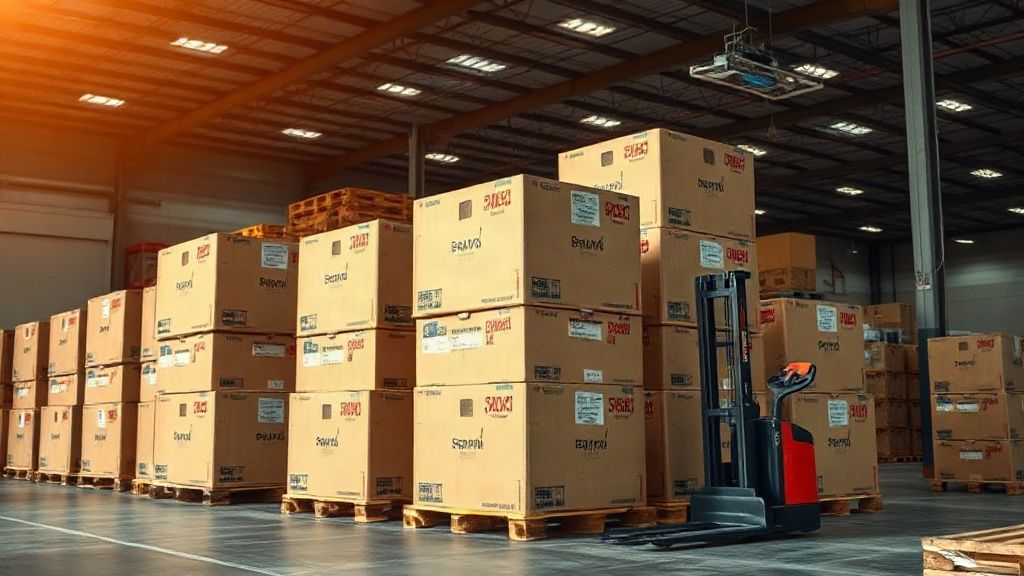
Perfume supplies wholesale means purchasing fragrance products, bottles, and related packaging in bulk directly from manufacturers, consolidators, or authorized distributors, rather than buying single retail units. For retailers, regional distributors, and importers, this wholesale model is what makes a fragrance business commercially viable, because landed cost per unit drops meaningfully once orders are structured around cartons, pallets, or container volumes instead of individual pieces. Getting it right comes down to three things: choosing the right supply channel for your business type, understanding how minimum order quantities and shipping terms shape total cost, and vetting suppliers so every batch you receive matches what was agreed.
Summary
- Perfume supplies wholesale involves buying in cartons, pallets, or container loads, with terms built around minimum order quantities (MOQs) and volume tiers rather than per-bottle retail pricing.
- Reliable sourcing depends on supplier transparency: batch documentation, consistent fill levels, and verifiable authenticity across repeat shipments.
- Logistics and customs planning — HS codes, dangerous goods paperwork for alcohol-based fragrances, and clear Incoterms — directly affect landed cost and delivery timelines.
- Margin is protected by diversifying the product mix across formats and categories, from niche fragrances to gift sets and standard bottle sizes, instead of competing on price alone.
What "Perfume Supplies Wholesale" Actually Means for B2B Buyers
The phrase covers two distinct supply chains, and confusing them is one of the most common mistakes new buyers make. The first is raw material and compound supply: essential oils, aroma chemicals, alcohol, and fixatives sold to manufacturers who formulate and fill their own fragrances. The second — and the one that matters for most retailers, distributors, and importers — is finished-goods wholesale, where complete, packaged perfumes are purchased in bulk for resale.
Finished-goods perfume supplies wholesale typically spans eau de parfum and eau de toilette concentrations, travel and miniature formats, gift and discovery sets, testers for in-store sampling, and sometimes empty or branded packaging components for private-label programs. A wholesale buyer's job is not to formulate fragrance, but to secure consistent, authentic stock at volume terms that leave room for a healthy retail or distribution margin once the product reaches the shelf or the next link in the chain.
This distinction matters because the vetting questions, lead times, and contractual terms differ sharply between the two. A business buying finished perfume for resale should be asking about batch consistency, box condition, and fulfillment reliability — not about aroma chemical sourcing or fragrance concentration formulas, which is the manufacturer's domain.
Who Relies on Wholesale Perfume Supply Chains
Retailers and Boutique Owners
Independent perfumeries, department store counters, and online retailers buy wholesale to stock a broad catalog without tying up capital in single-piece purchases. For this group, the priority is usually assortment breadth — enough variety across brands, concentrations, and price points to serve different customer segments — combined with the ability to reorder fast-moving lines without re-negotiating terms every time.
Distributors and Regional Wholesalers
Distributors buy at a higher volume tier specifically to resell to smaller retailers in their region or country. Their margin depends on securing better pricing brackets than a single-store buyer could reach, and on having enough warehouse capacity and working capital to hold stock between large inbound shipments and smaller outbound orders.
Importers Expanding Into New Markets
Importers add a layer of complexity because they are responsible for customs clearance, local regulatory compliance, and often the first mile of in-country distribution. For this group, supplier reliability and documentation accuracy matter even more, since errors in paperwork can hold a shipment at a border for weeks and erase the cost advantage of buying wholesale in the first place.
Across all three profiles, the underlying question is the same: which supplier can deliver authentic, well-packaged stock on a predictable schedule, at a volume price that still leaves room for profit once freight, duties, and operating costs are factored in.
How Sourcing Works: From Manufacturer to Shelf
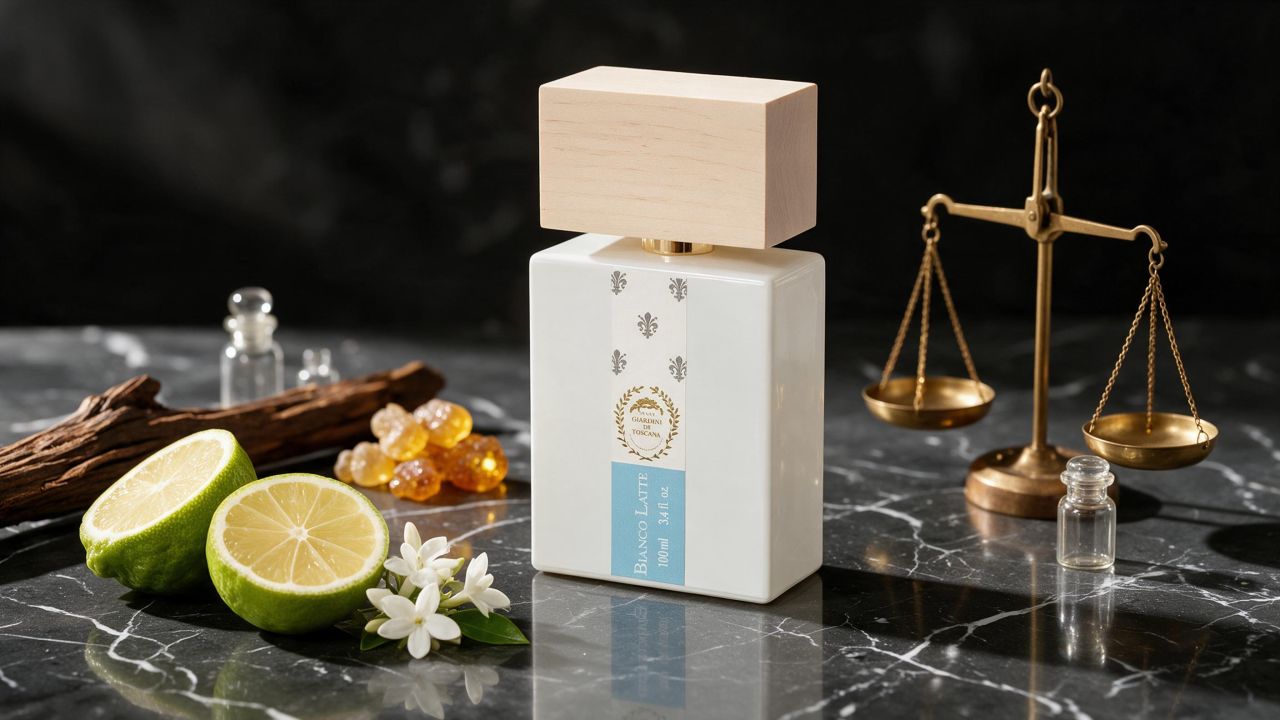
A typical wholesale supply chain for finished perfume runs through several stages before stock reaches a buyer's warehouse. Fragrance houses and manufacturers formulate and compound the juice, which is then filled into bottles, sealed, boxed, and batch-coded for traceability. From there, stock moves either directly to large distributors and importers, or through a wholesale intermediary that consolidates orders from multiple brands into a single shipment.
Understanding where a supplier sits in this chain tells you a lot about what to expect. A manufacturer or its authorized distributor can usually guarantee batch traceability back to the point of filling, while a reseller further down the chain may only be able to pass along whatever documentation they received — which is worth confirming before committing to a large order.
Raw material origin is often part of the marketing story behind a fragrance, but as a wholesale buyer your due diligence should focus on what you can verify: batch numbers, box condition, fill-level consistency, and whether the supplier can produce the same paperwork on a reorder months later. Consistency across shipments is usually a better predictor of a trustworthy supplier than any single claim about ingredient sourcing.
Minimum Order Quantities, Volume Tiers and Wholesale Terms
Minimum order quantities (MOQs) exist because wholesale pricing only makes sense at a certain scale — packing, documentation, and freight costs are largely fixed per shipment, so spreading them across more units is what makes the per-unit price competitive. MOQs can be set per SKU, per brand, or as a blended total across a mixed order, and understanding which model a supplier uses changes how you plan your catalog.
Most wholesale suppliers structure pricing in tiers: crossing a certain order volume unlocks a better rate, and crossing the next threshold unlocks another. For a retailer testing a new line, it is often worth asking whether a smaller trial order is possible at a slightly less favorable rate, rather than committing to a full volume tier before confirming how the product performs with your customers.
Payment terms are negotiated alongside volume. New buyers should expect to pay upfront or via letter of credit on a first order, with more flexible terms — partial deposit, net payment windows — becoming available once a track record of reliable, on-time payment is established. Building that track record early, even on smaller orders, tends to pay off when you want to scale a relationship with a supplier that has proven reliable.
How to Vet and Choose a Reliable Wholesale Perfume Supplier

Documentation and Authenticity
Before placing a significant order, ask for batch certificates, a packing list format sample, and clarity on how the supplier handles authenticity guarantees. A supplier that hesitates to share this kind of documentation, or that cannot explain where a given batch came from, is a risk regardless of how attractive the quoted price looks.
Consistency Across Batches
One strong shipment does not prove reliability — the real test is whether the second and third shipments match the first in fill level, box condition, and batch traceability. Buyers who scale successfully tend to start with a smaller order specifically to test this consistency before committing to a larger volume tier.
Communication and Fulfillment Reliability
Response times, clarity around lead times, and how a supplier handles a shortage or delay all matter as much as price. A supplier who communicates a delay early, with a revised date, is far easier to plan around than one who goes quiet and leaves you guessing — and that difference becomes critical once your own customers are depending on your stock arriving on schedule.
A supplier worth building a long-term relationship with should also be able to support your business as it grows — for example, by offering a wider catalog that includes niche perfume lines once your core assortment is established, rather than leaving you to source new categories from scratch with an unfamiliar partner.
Logistics, Shipping and Customs Considerations for Bulk Perfume Orders
Perfume is classified as a dangerous good for shipping purposes because of its alcohol content, which means freight documentation, packaging, and in some cases the carrier itself must comply with hazardous materials regulations. Budgeting extra lead time for this paperwork, especially on a first shipment with a new supplier, avoids surprises at the point of dispatch.
Sea freight is the standard choice for large volume orders because of its cost efficiency, while air freight is reserved for smaller, time-sensitive, or high-value shipments. Whichever mode you choose, agreeing on Incoterms upfront — who is responsible for freight, insurance, and customs clearance at each stage — prevents disputes over unexpected costs once the shipment is already in transit.
On the customs side, correct HS (Harmonized System) code classification determines the duty rate applied to your shipment, and errors here are a common cause of delays at the border. Importers should also confirm whether any local regulatory labeling, ingredient disclosure, or safety documentation is required in the destination market before the shipment arrives, since retrofitting compliance after goods land is far more expensive than planning for it in advance.
Building in a realistic buffer between placing an order and needing the stock on shelf — accounting for production, consolidation, freight transit, and customs clearance — is one of the simplest ways to avoid stockouts that damage a retail relationship or a seasonal sales window.
Building Margin Through Product Mix and Format Strategy
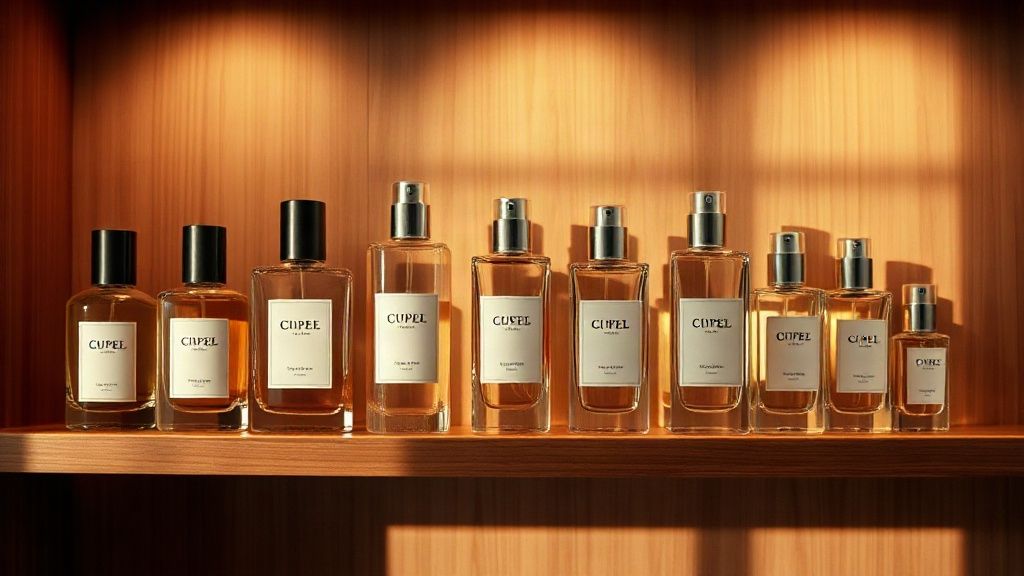
Price competition alone is rarely a sustainable strategy for a wholesale buyer, because anyone can undercut on a single SKU. A more durable approach is building a product mix that serves different customer segments and price points at once, so that margin comes from assortment strategy rather than from squeezing the lowest possible unit cost on one line.
Offering a spread of bottle formats is a straightforward way to do this. A 38ml perfume format suits travel-size demand and lower price-point entry purchases, while a 50ml perfume format serves the core, everyday-use segment that most retail customers gravitate toward. Stocking both lets a retailer or distributor address two different buying occasions without sourcing from two separate supply chains.
Bundled offerings add another layer of margin opportunity. A perfume set packaged for gifting typically moves well around seasonal peaks and can carry a better margin than the equivalent items sold separately, since the packaging and presentation add perceived value without a proportional increase in landed cost. For buyers looking to differentiate from mass-market competitors, adding a curated niche perfume selection alongside mainstream lines gives a catalog more depth and appeals to customers actively seeking something outside the usual department-store assortment.
The right balance depends on your specific customer base, but the principle holds across markets: a wholesale buyer who diversifies format and category is less exposed to demand swings in any single line, and has more room to protect margin than one relying on a narrow catalog.
Common Mistakes B2B Buyers Make When Sourcing Perfume Supplies Wholesale
Several recurring errors show up across first-time and even experienced wholesale buyers, and most are avoidable with a bit of upfront diligence.
- Treating the quoted MOQ as fixed. Many suppliers have flexibility on minimum order quantities, especially for a trial order or a buyer with growth potential — it is always worth asking before walking away from an otherwise promising supplier.
- Skipping documentation checks on a "good price." An unusually low quote with no batch documentation or authenticity guarantee is a signal to slow down, not a reason to move faster.
- Underestimating customs and freight lead time. Planning a launch or seasonal restock around the fastest-case shipping estimate, rather than a realistic one that accounts for customs clearance, is a frequent cause of stockouts.
- Concentrating the entire order in one product line. A catalog built around a single bestseller is vulnerable to a single shift in customer demand; spreading orders across formats and categories, as discussed above, reduces that risk.
- Not testing a new supplier relationship with a smaller order first. Jumping straight to a full volume-tier order with an unproven supplier removes your ability to catch consistency problems before they become expensive.
None of these mistakes are complicated to avoid — they mostly require treating supplier selection with the same rigor as any other significant procurement decision, rather than defaulting to whichever quote looks best on paper.
Frequently Asked Questions
What is the difference between perfume supplies wholesale and buying from a single distributor?
Perfume supplies wholesale is the broader practice of sourcing fragrance products in bulk from any qualified channel — a manufacturer, an authorized distributor, or a wholesale consolidator. Buying from a single distributor is one specific way of doing that; it usually means less direct access to batch-level documentation than buying closer to the manufacturer, but it can simplify logistics for a buyer who does not need container-level volume.
What documents should I request before placing a bulk perfume order?
At minimum, ask for a packing list, batch or lot documentation, and confirmation of how the supplier handles authenticity guarantees. If you are importing, also confirm what commercial invoice and certificate of origin documentation will be provided, since customs clearance depends on having these ready at the point of entry.
How do minimum order quantities typically work for wholesale perfume buyers?
MOQs are usually set to make packing, documentation, and freight costs economical relative to the order size, and they can apply per SKU, per brand, or as a blended total across a mixed order. Many suppliers offer tiered pricing above the minimum, so a larger order often unlocks a better rate, and some allow a smaller trial order at a slightly less favorable rate for new buyers.
Can importers buy mixed pallets of different perfume formats and brands?
Yes — many wholesale suppliers support mixed-pallet orders that combine different bottle sizes, gift sets, and brand lines in a single shipment, which helps importers and distributors diversify their catalog without managing multiple separate supplier relationships. The key is confirming upfront how mixed orders affect MOQ calculations and pricing tiers, since some suppliers price mixed pallets differently from single-SKU bulk orders.


