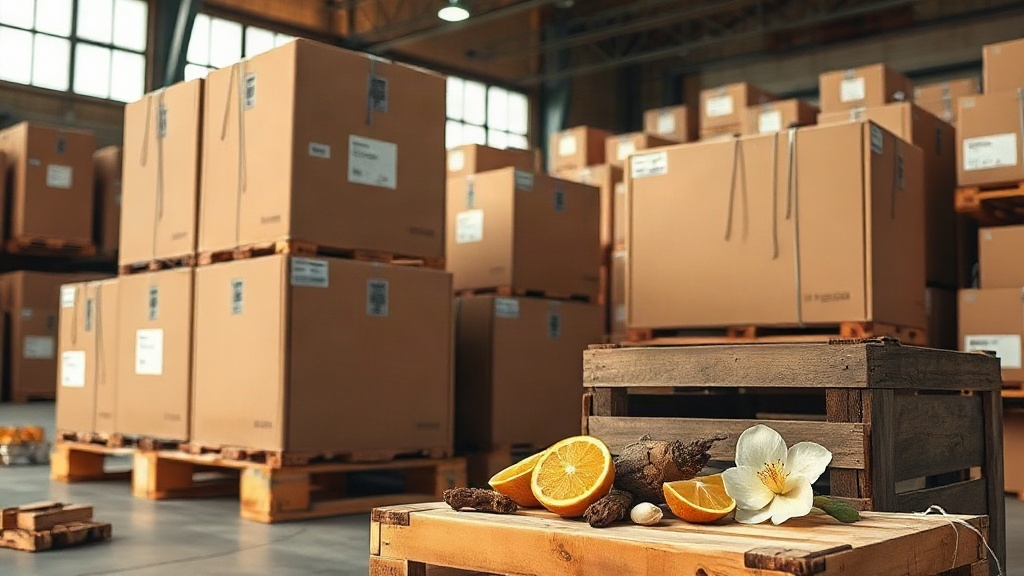
Perfume fragrance oils wholesale means purchasing concentrated aromatic oils in bulk directly from a manufacturer or distributor, rather than buying single finished bottles at retail prices. For importers, distributors, and retail chains, buying wholesale typically unlocks a lower per-unit cost, consistent batch-to-batch quality, and flexible packaging or private-label options that retail channels don't offer. The key for a B2B buyer is matching the right concentration, order format, and supplier documentation to the resale channel you're building, not simply chasing the lowest unit price.
Summary
- Wholesale fragrance oil buying centers on concentration type, minimum order quantity, and supplier documentation, not just unit price.
- Minimum order quantities vary by format, raw concentrate versus finished packaged perfume, and they directly shape your working capital and storage needs.
- Reliable suppliers provide batch traceability, compliant labeling, and sample access before you commit to a full order.
- Margins depend on positioning, since raw oil concentrates, gift sets, and ready-to-shelve retail sizes each carry a different cost-to-resale structure.
What Are Perfume Fragrance Oils, and Why Do Wholesale Buyers Source Them?
Fragrance oils are the aromatic compounds that give a perfume its identity. In a wholesale context, the term usually covers two distinct products: raw fragrance oil concentrate, which is the compounded scent before it is diluted into alcohol or packaged, and finished perfume, where that concentrate has already been blended into Eau de Parfum or Eau de Toilette strength and bottled. Both are sold to B2B buyers, but for very different business models.
A retailer or boutique that wants shelf-ready stock typically buys finished perfume by the case. A private-label brand, a candle or home-fragrance manufacturer, or a regional distributor building its own line may instead buy the concentrate itself, so it can control dilution, bottling, and branding downstream. Understanding which of these two you actually need is the first decision in any wholesale fragrance oil sourcing project, because it changes your MOQ, your storage requirements, and your regulatory obligations.
Wholesale buyers choose to source fragrance oils rather than finished retail units for a few recurring reasons: predictable unit economics at volume, the ability to diversify a catalog across many scent families without paying retail markup on each one, and access to formats, such as drums, bulk cases, or mixed cartons, that simply are not available through single-unit retail purchasing.
How the Wholesale Fragrance Oil Supply Chain Works
Fragrance Concentrates vs. Finished Perfume
A fragrance concentrate is the undiluted aromatic blend, often supplied in small drums or bulk containers measured by weight or volume. It is strong, stable, and meant to be professionally diluted before it reaches an end consumer. Finished perfume, by contrast, is already diluted to its final strength and bottled, labeled, and ready for retail display. For most wholesale buyers who are not operating their own compounding or filling line, finished, pre-bottled stock is the more practical route, since it removes the technical and regulatory burden of in-house dilution.
Common Order Formats for B2B Buyers
Wholesale orders are typically structured around case packs rather than single units. A case might contain a fixed quantity of a single fragrance, or a mixed assortment across a product line. Distributors and importers often negotiate with suppliers to combine several fragrance families or bottle sizes within a single shipment, which helps balance market testing with the efficiency of a full container or pallet load. Buyers who plan to private label will instead discuss bulk concentrate volumes, measured in liters or kilograms, along with the supplier's compounding and filling capabilities.
Minimum Order Quantities: What They Mean for Your Purchasing Plan
Minimum order quantity, or MOQ, is the smallest volume a supplier will accept per order, and it is one of the most important variables in wholesale fragrance sourcing because it determines how much capital you tie up before you have sold a single unit. MOQs are generally higher for raw concentrate, since compounding and filling a small production run is inefficient for the supplier, and comparatively more flexible for finished, pre-packaged perfume that is already sitting in inventory.
For a buyer who is testing a new market or a new fragrance family, a lower MOQ, even at a slightly higher per-unit cost, often makes more financial sense than committing to a large volume at the best possible price. As sell-through data accumulates, you can then negotiate tiered pricing where the unit cost decreases at higher volume thresholds, which is standard practice in B2B fragrance sourcing. It is also worth asking suppliers whether MOQs can be met with a mixed assortment across several SKUs rather than a single fragrance, since this lets you diversify your catalog while still meeting the supplier's minimum.
Storage and shelf life should factor into your MOQ decision as well. Fragrance oils and finished perfumes are sensitive to heat, light, and air exposure, and a large order that sits in a warehouse for too long can degrade before it sells. A disciplined buyer sizes the order to projected sell-through over a defined period, not simply to the lowest achievable unit price.

Vetting a Reliable Wholesale Fragrance Oil Supplier
Price is the easiest thing to compare between suppliers and the least reliable way to choose one. A supplier that cannot produce consistent batches, proper documentation, or timely communication will cost you far more in returns, compliance headaches, and lost sell-through than a few cents saved per unit. Before committing to a wholesale relationship, a B2B buyer should evaluate the supplier the same way they would evaluate any long-term vendor.
Documentation, Certificates, and Traceability
Ask for batch numbers, ingredient documentation, and safety data sheets for any fragrance concentrate or finished perfume you intend to import or resell. This documentation supports your own compliance obligations, helps with customs clearance, and gives you a paper trail if a batch ever needs to be traced back to its source. A supplier that readily provides this information, without being asked twice, is signaling an operational maturity that smaller or less established suppliers often cannot match.
Requesting Samples Before You Commit
Never place a first wholesale order sight unseen. Request samples of the specific fragrances, concentrations, and packaging you intend to buy, and evaluate them for scent accuracy against the reference you expect, longevity on skin or in a diffused format, and the quality of the bottle, cap, and box if you are buying finished product. It is also reasonable to ask an established supplier for references from other B2B clients, particularly other importers or distributors operating in your region, since they can speak to order accuracy and delivery reliability over time.

Margins and Pricing Structure for Resale Businesses
Your margin on wholesale fragrance oils is not simply the gap between the wholesale unit price and whatever you charge downstream. It is the gap between your fully landed cost, which includes the unit price, freight, import duty, insurance, and storage, and your resale price at whichever point in the chain you operate. A distributor reselling to retailers needs to build in enough margin for the retailer to mark up again, while a retailer selling direct to a boutique or e-commerce customer has a different structure entirely.
Volume-based tiered pricing is the most common lever for improving margin over time. As your order history with a supplier grows, you are generally in a position to negotiate better per-unit pricing, extended payment terms, or priority access to new fragrance launches. Bundling is another lever worth considering: pairing complementary fragrances into a set, or combining a core fragrance with a smaller companion size, tends to increase average order value for your downstream customers without requiring you to discount your core catalog. A curated assortment such as a ready-made perfume set can also help you test new fragrance families with lower per-SKU risk, since the set is priced and positioned as a single purchasing decision for your buyer.
It is worth resisting the temptation to chase the absolute lowest unit price across every order. A slightly higher cost from a supplier with strong documentation, consistent fill levels, and reliable lead times will almost always protect your margin better over a full selling season than a marginally cheaper order that arrives late, mislabeled, or inconsistent batch to batch.
Logistics, Customs, and Cross-Border Shipping for B2B Orders
Most wholesale fragrance oil transactions involve cross-border shipping, and the logistics are more involved than for most consumer goods categories. Fragrance concentrates and finished perfumes containing alcohol can be classified as flammable or hazardous goods for freight purposes, which affects how they can be shipped, what documentation is required, and which carriers will accept the shipment. Always confirm the shipping classification with your supplier and your freight forwarder before booking a shipment, since misclassification can cause delays or rejected cargo at the port.
Incoterms, the standardized shipping terms that define who is responsible for freight, insurance, and risk at each stage of the journey, should be agreed with your supplier before the first order is confirmed. Common arrangements range from EXW, where you take responsibility from the supplier's warehouse door, to CIF or DDP, where the supplier handles more of the journey on your behalf. Each option shifts cost and risk differently, and the right choice depends on whether you already have an established freight forwarder and customs broker in your home market.
On the customs side, you will typically need a commercial invoice, a packing list, and in many jurisdictions a certificate of origin, along with the correct harmonized tariff classification for fragrance products, which determines the import duty you owe. Because fragrance products sit at the intersection of cosmetics and chemical regulation in many countries, it is worth confirming with a licensed customs broker in your own market exactly which labeling, registration, or safety documentation is required before the shipment lands, rather than discovering a gap once the container is already at the port.
Choosing the Right Format: Oils, Sets, and Retail-Ready Sizes
Not every wholesale buyer needs the same format, and matching the format to your channel is as important as matching the fragrance to your market. Buyers building a private-label or custom-blend program will prioritize raw concentrate and a supplier with reliable compounding capability. Buyers supplying boutiques, duty-free counters, or multi-brand retail will generally prioritize finished, retail-ready stock that requires no further processing.
Within finished perfume, bottle size and presentation matter for how the product performs on a shelf or in a gifting channel. A smaller size, such as the 38ml perfume format, works well for impulse purchase points, travel retail, or as a companion item alongside a core fragrance. A 50ml perfume size is often the sweet spot for everyday retail shelving, balancing a visible price point with a size that lasts the end consumer long enough to drive repeat purchase. For buyers targeting a more selective or prestige-positioned retail segment, sourcing from a niche perfumes collection can differentiate an assortment from the mass-market fragrances most competitors are already stocking, which is particularly useful for boutiques and specialty distributors trying to build a distinctive catalog rather than compete purely on price.

Building a Long-Term Wholesale Partnership
A single successful order is a transaction. A long-term wholesale relationship is what actually protects your margin, your lead times, and your product availability over multiple selling seasons. Buyers who treat their fragrance oil supplier as a partner rather than a one-time vendor tend to get first access to new launches, more flexibility on MOQs during slow periods, and better payment terms as trust builds.
Forecasting demand and sharing that forecast with your supplier, even informally, helps the supplier plan production and protects your lead times during peak seasons. It is also worth establishing a regular cadence of quality checks on incoming shipments, comparing fill levels, batch consistency, and packaging quality against your original samples, so that any drift gets caught early rather than after a customer complaint. Clear communication channels, a known point of contact on the supplier side, and a shared understanding of lead times all reduce the operational friction that otherwise erodes margin over time.
Frequently Asked Questions
What is a typical minimum order quantity for wholesale fragrance oils?
Minimum order quantities vary significantly depending on whether you are buying raw concentrate or finished, packaged perfume, and by supplier. Finished perfume is generally available at more accessible minimums since it is already produced and packaged, while raw concentrate intended for private-label production usually carries a higher minimum because of compounding and filling costs. It is best to confirm the exact MOQ, and whether it can be met with a mixed assortment, directly with your supplier before planning your order.
Are wholesale fragrance oils the same as essential oils?
No. Essential oils are extracted directly from a single plant source and are used primarily in aromatherapy and natural wellness products. Fragrance oils used in perfumery are compounded blends, which may combine natural extracts, aroma chemicals, or both, specifically formulated to create a layered perfume profile. The two categories are sourced, regulated, and priced differently, so it matters which one your business actually needs before you approach a supplier.
What documents should I request from a fragrance oil supplier before importing?
At minimum, request a commercial invoice, a packing list, batch documentation, and a safety data sheet for the product. Depending on your country's import requirements, you may also need a certificate of origin and confirmation of the correct tariff classification. A reliable supplier will be able to provide this documentation promptly, and a customs broker in your own market can confirm whether anything additional is required for your specific jurisdiction.
Can I order a mixed assortment of fragrances to meet a wholesale minimum?
In many cases, yes. Suppliers frequently allow a minimum order quantity to be met across a combination of SKUs, bottle sizes, or fragrance families rather than requiring a single fragrance in bulk. This is particularly useful for buyers who are testing a new market or building out an assortment, since it reduces the risk of overcommitting to any single scent before you have sell-through data to guide a larger reorder.