There is no Byredo fragrance actually called "Marijuana" — the product people are searching for under this term is almost always Byredo Black Afgano, the house's cult, discontinued-then-revived niche release built around a cannabis-leaf, hashish, and incense accord layered over tobacco, dark woods, and black pepper. For wholesale buyers, the practical takeaway is that customers and retail staff will frequently ask for "the Byredo marijuana perfume" by nickname rather than by its real name, so your catalog, staff training, and on-site search need to bridge that terminology gap to capture the demand.
Özet
- "Byredo marijuana" is consumer shorthand for Byredo Black Afgano, a niche fragrance built on a cannabis/incense/hashish accord — there is no SKU with "marijuana" in its official name.
- Wholesale buyers should map informal search terms to the correct SKU in their own product listings and staff scripts to avoid losing sales to competitors who rank for the same query.
- Sourcing niche Byredo fragrances wholesale involves different MOQ, lead-time, and authentication considerations than mainstream designer lines.
- Pairing this cult SKU with complementary Byredo bestsellers spreads inventory risk and gives distributors and retailers a stronger assortment story.
What "Byredo Marijuana" Actually Refers To
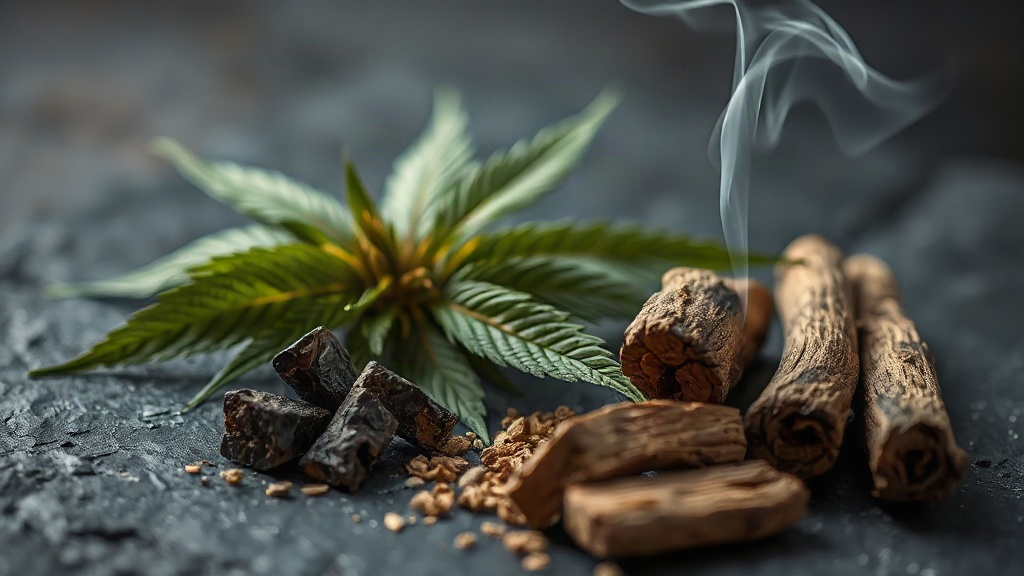
Byredo Black Afgano has carried an unofficial nickname in online search behavior for years, largely because its dominant accord reads instantly as cannabis leaf and hashish smoke to most noses. The composition opens with sharp greenness and black pepper, moves through a dense cloud of incense and tobacco, and settles into a resinous, slightly animalic base of woods and musk. None of that is cannabis extract — perfumers reach this effect with a combination of hemp-like green facets, oud-adjacent woods, and incense resins — but the resemblance is strong enough that the fragrance has become a reference point that buyers bring up by smell description rather than by name.
For a B2B catalog, this matters in two concrete ways. First, if your product data, meta titles, and category pages never use any variant of the terms people actually type, you are structurally invisible to that demand regardless of how well the product itself would sell. Second, retail and wholesale customers calling in to ask about "the Byredo marijuana scent" need your sales and account teams to recognize the request immediately and route it to the correct SKU, rather than spending time on a back-and-forth that erodes confidence in your catalog expertise.
Recognizing this search pattern is also a useful signal for assortment planning more broadly. Niche fragrance houses increasingly build cult followings around a handful of distinctive, talked-about releases, and those releases tend to generate disproportionate search interest relative to their formal marketing spend. Buyers who track which SKUs attract this kind of organic nickname-driven demand can often identify strong sell-through candidates before competitors formalize the opportunity in their own catalogs.
Why This Niche Demand Matters for a Wholesale Catalog
Designer fragrance distribution is a volume game with thin, well-known margins and heavy price transparency across marketplaces. Niche and artistic perfumery, including most of the Byredo range, operates on a different logic: smaller production runs, stronger brand storytelling, and a customer base that is less price-sensitive and more loyalty-driven once they find "their" house. Black Afgano sits at the sharpest edge of that niche positioning — it is polarizing, memorable, and frequently discussed in fragrance communities, which keeps organic search and word-of-mouth demand alive long after a typical seasonal launch would have faded.
For a distributor or multi-brand retailer, stocking a handful of these conversation-starting SKUs alongside the steadier, broadly appealing bestsellers in a brand's range is a deliberate merchandising strategy rather than an impulse buy. The cult item draws attention, search traffic, and first-time inquiries; the dependable bestsellers convert that attention into repeat, predictable order volume. Treating Black Afgano purely as a one-off novelty misses this dynamic — it works best as the "hook" product in a broader Byredo assortment plan, discussed further below.
It is also worth noting for category planning that interest in cannabis-adjacent olfactory profiles has grown across the wider fragrance market, not just around this one SKU. Buyers assembling a niche shelf should expect ongoing demand for resinous, smoky, and green-herbal compositions, and should budget shelf or catalog space accordingly rather than treating this as a one-time trend tied to a single product.
Minimum Order Quantities, Lead Times, and Procurement Flow
Niche fragrance houses generally run smaller, less frequent production batches than mass designer brands, and this has direct consequences for wholesale procurement. Minimum order quantities for niche SKUs are often structured per case pack rather than per unit, and buyers should expect longer or less predictable lead times than for high-volume designer lines, particularly around a cult item like Black Afgano where demand spikes can outpace restocking cycles. Building in buffer lead time when planning seasonal or promotional campaigns around this fragrance specifically is good practice.
A practical way to manage MOQ efficiently is to consolidate orders across several SKUs from the same house rather than ordering a single niche item in isolation. Combining an order for Black Afgano with complementary, steadier-moving Byredo fragrances lets a distributor or retailer reach supplier minimums faster, reduces per-unit freight cost, and avoids tying up working capital in a single polarizing scent that may have a narrower, more passionate — but smaller — buyer base than a brand's flagship releases.

Forecasting matters here as much as the ordering mechanics. Because niche SKUs like this one are more exposed to social-media-driven demand spikes than steady designer lines, buyers benefit from monitoring search and sell-through data on a shorter review cycle — monthly rather than quarterly — so reorders can be placed before a stockout rather than after one. A stockout on a cult item is particularly costly in reputational terms, since the customer base actively discusses availability within fragrance communities.
Consolidating Shipments Across SKUs
Where possible, align the reorder cycle for Black Afgano with your broader Byredo replenishment schedule. This reduces the number of separate shipments crossing customs, simplifies freight forwarding paperwork, and lets your procurement team negotiate better freight rates on a single consolidated shipment rather than several smaller ones.
Verifying Authorized Suppliers and Managing Authentication Risk
Niche fragrances with cult status are disproportionately targeted by grey-market resellers and counterfeiters, simply because demand regularly outstrips official supply. Before committing to a bulk order, wholesale buyers should confirm that a supplier is an authorized distributor or an officially recognized reseller for the brand in the relevant territory, and should request documentation — commercial invoices, certificates of authenticity where available, and clear chain-of-custody paperwork — rather than relying on verbal assurances.
Physical authentication checks remain essential even when working with a trusted supplier, since counterfeit volumes in the niche perfumery segment have grown alongside its popularity. Batch codes, cellophane wrapping quality, box printing consistency, and cap or spray mechanism construction are all worth inspecting on a sample unit before a full shipment is accepted. Any wholesale partner unwilling to provide a pre-shipment sample or batch code information should be treated as a higher-risk source regardless of how competitive their offer appears.
Customs and import compliance deserve particular attention for a fragrance with a cannabis-associated reputation, even though the formula itself contains no controlled cannabis extract. Import declarations should accurately describe the product as an alcohol-based eau de parfum with its correct tariff classification, and buyers should keep safety data sheets and ingredient documentation on hand in case customs authorities request clarification given the product's nickname and packaging references. Working with a freight forwarder experienced in fragrance and cosmetics shipments reduces the risk of delays caused by this kind of naming confusion at the border.
Finally, confirm that the specific formulation batch complies with current IFRA (International Fragrance Association) standards for the markets you intend to sell into, since restricted or reformulated ingredient lists can vary by region and by production year. A reputable distributor should be able to confirm compliance documentation on request.
Margin Strategy and Catalog Positioning
Niche perfumery generally supports stronger wholesale margins than mainstream designer fragrance, precisely because the segment competes on exclusivity and story rather than on price comparison across marketplaces. Rather than discounting a cult SKU like Black Afgano to move volume, most successful niche retailers position it as a destination item — something a customer seeks out specifically — and protect its margin accordingly, while using steadier bestsellers in the same brand range to compete on availability and service.
Catalog presentation matters as much as pricing strategy here. Giving a polarizing, story-rich fragrance its own editorial treatment — background on the house, honest notes about how divisive its scent profile is, and clear guidance on who it suits — tends to convert better than listing it alongside conventional designer releases with generic copy. B2B buyers assembling assortments for retail partners should expect to supply, or request from suppliers, this kind of descriptive material rather than relying on bare spec sheets.
It is also worth setting customer expectations internally and with retail partners that a fragrance this distinctive will have a lower universal appeal than a brand's mainstream bestsellers, even though its per-unit margin and search-driven demand can be excellent. Planning order volume around a realistic sell-through rate for a niche, divisive scent — rather than treating it like a flagship SKU — avoids overstocking a product that, however well it performs in search, is not meant to be a mass-market mover.
Building a Complete Byredo Assortment Around This Demand
The strongest wholesale strategy around a cult, search-driving SKU is rarely to stock it alone. Pairing Black Afgano with a small, well-chosen set of complementary Byredo fragrances gives distributors and retailers a fuller story to tell buyers, spreads inventory risk across several olfactory families, and makes it easier to hit supplier minimums on a combined order.
A gourmand, crowd-pleasing counterpart such as Byredo Vanille Antique EDP 50ml works well as the accessible, broadly appealing anchor next to Black Afgano's polarizing intensity, giving retail partners a safer recommendation for customers who are curious about the house but not ready for its most divisive release. Byredo's best-known bestseller, Byredo Bal d'Afrique EDP 100ml, is worth including in any serious Byredo assortment as the steady, high-recognition volume driver that balances a niche shelf weighted toward more unusual compositions.
For buyers specifically building out the house's darker, more narcotic-leaning line next to Black Afgano, Byredo Black Narcotique EDP 100ml shares a similar intensity register and can be merchandised together as a "Black" collection for customers drawn to bold, statement fragrances. Rounding out the assortment with a widely praised, gender-neutral musk such as Byredo's Mojave Ghost EDP 100ml gives a fourth olfactory family — soft, powdery, and mainstream-friendly — that further diversifies the shelf beyond resinous and narcotic profiles.

This kind of deliberate range-building also simplifies reordering logistics, since a buyer working with a single supplier across four or five SKUs from the same house can negotiate combined shipping and more consistent lead times than when ordering single items piecemeal from multiple sources.
Frequently Asked Questions
Is there an actual Byredo perfume called "Marijuana"?
No. There is no Byredo fragrance officially named "Marijuana." The search term almost always refers to Byredo Black Afgano, whose cannabis-leaf, incense, and hashish-like accord has earned it this informal nickname among consumers.
What does Byredo Black Afgano smell like?
It opens with sharp green and peppery facets, develops through a dense cloud of incense and tobacco, and settles into a resinous, musky, woody base. The overall effect reads to most people as smoky, herbal, and distinctly cannabis-like, even though the formula contains no cannabis extract.
What should wholesale buyers check before ordering niche Byredo fragrances in bulk?
Confirm the supplier's authorized distributor status, request batch codes and certificates of authenticity, inspect a sample unit for packaging consistency, and verify that import documentation and IFRA compliance paperwork are available before committing to a full shipment.
How can a distributor reduce risk when adding a polarizing, cult SKU like this to their catalog?
Combine it with complementary, steadier-selling fragrances from the same house to consolidate minimum order quantities and spread demand risk, price it to protect its niche-segment margin rather than competing on volume discounting, and set realistic sell-through expectations given its narrower, more passionate buyer base.